Airbound, a Bengaluru-based startup building autonomous delivery drones, has raised $37 million in Series A funding as it races to make air logistics as cheap and routine as moving goods by truck.
The round was led by Greenoaks, with participation from DoorDash, Lachy Groom, Lightspeed and Humba Ventures, lifting Airbound’s total funding to nearly $50 million. The company, founded by engineer Naman Pushp, is betting that a radical rethink of aircraft design can unlock mass-market aerial delivery in India and beyond.
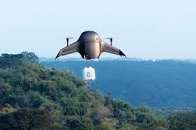
Instead of conventional multicopters or fixed-wing drones, Airbound uses a rocket-like “tail-sitter” design. Its aircraft take off and land vertically on their tails, then tilt forward into efficient horizontal flight. Crucially, Pushp says, the drones are engineered so that the payload outweighs the aircraft itself, attacking one of aviation’s core inefficiencies: the energy spent hauling the vehicle rather than the cargo.
The current model, dubbed TRT, weighs about 3.3 pounds and carries roughly 2.2 pounds of goods. The next-generation version under development is expected to weigh around 6.6 pounds while lifting up to 11 pounds, a reversal of the usual ratio in small aircraft.
Airbound has already logged more than 13,000 autonomous flights over the southern cities of Bengaluru and Guntur. A flagship deployment is with hospital network Narayana Health, where drones shuttle diagnostic samples between facilities. On one key route, a single drone covers about 2.5 miles in seven minutes, compared with three to five hours by road once batching and traffic delays are factored in.
The Narayana partnership is expanding to a new hospital in Bengaluru that was deliberately built without an on-site lab or blood bank, relying instead on Airbound’s aircraft to connect to centralized facilities. For hospital operators, that model promises lower capital costs and faster, more predictable logistics.
Airbound’s ambitions extend far beyond healthcare. The company has signed an agreement with the government of Andhra Pradesh to develop a drone delivery network linking three cities, targeting up to 10,000 flights a day for retail, e-commerce and medical supplies. Depending on route lengths, that could require 250 to 1,000 aircraft, though Pushp expects to hit the target with closer to 250.
Unlike some rivals, Airbound is positioning itself less as a logistics operator and more as a manufacturer of the underlying aircraft platform — “the Boeing role,” as Pushp puts it. The company designs and builds its drones in a 43,000-square-foot facility in Bengaluru, keeping core systems in-house.
The biggest constraint now is not hardware but regulation. Scaling to thousands of daily flights will require broad approvals for beyond visual line of sight operations, a regime that remains tightly controlled in India. For the moment, Airbound is largely pre-revenue, supporting a team of more than 150 people while it navigates the regulatory path.
Pushp’s bet is long-term. The aim, he says, is not quick returns but to build an aviation giant that can one day make flying packages as ordinary — and as affordable — as sending them by truck.