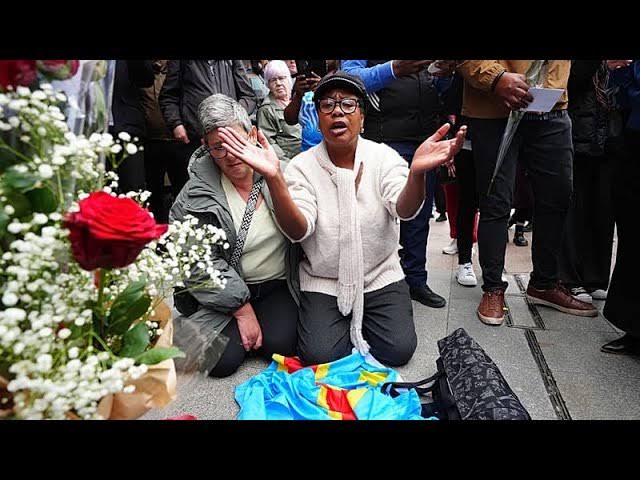
The death of Yves Sakila, a 35-year-old Congolese man who collapsed after being restrained by private security guards in central Dublin, has become a defining test of Ireland’s claims to fairness and equality. What began as an alleged shoplifting incident outside a busy department store has spiralled into a national reckoning over race, policing and the power of private security in public spaces.
Witnesses’ videos show Sakila held face down on the pavement by several guards for several minutes. By the time gardaí arrived, he was unresponsive; he later died in hospital. An initial postmortem was inconclusive, leading authorities to commission a second, independent examination by a British forensic specialist. The Garda investigation is continuing, and no definitive cause of death has yet been made public.
The footage has drawn immediate comparisons with the killing of George Floyd in the United States, and protesters in Dublin have echoed that language, marching with Black Lives Matter placards and chanting Sakila’s name. Demonstrators say the images raise unavoidable questions about whether racial bias shaped the response to a minor alleged offence, and whether lethal levels of force were used against a Black man in a situation that did not appear to threaten life.
For many Black Irish residents and migrants, the case has crystallised long-standing fears about racial profiling, disproportionate suspicion and the sense of being permanently under scrutiny in shops, on public transport and on the streets. Community leaders argue that Sakila’s death cannot be separated from a wider climate in which migrants and asylum seekers have faced protests outside accommodation centres and a surge of online abuse.
The controversy has also exposed tensions in mainstream politics. Critics say years of rhetoric linking immigration to housing shortages and pressure on public services have normalised the idea that newcomers, particularly from African countries, are a problem to be managed rather than neighbours to be welcomed. That narrative, they argue, creates the conditions in which a Black man can be seen first as a threat and only later as a victim.
The department store involved has expressed sympathy and promised a review of its security procedures, but campaigners are demanding far more: clear national rules on restraint, stronger oversight of private guards and an honest confrontation with racism in Irish life. For Sakila’s family and supporters, justice means not only establishing how he died, but ensuring that no one else dies in similar circumstances, in full view of a city that prides itself on its hospitality.