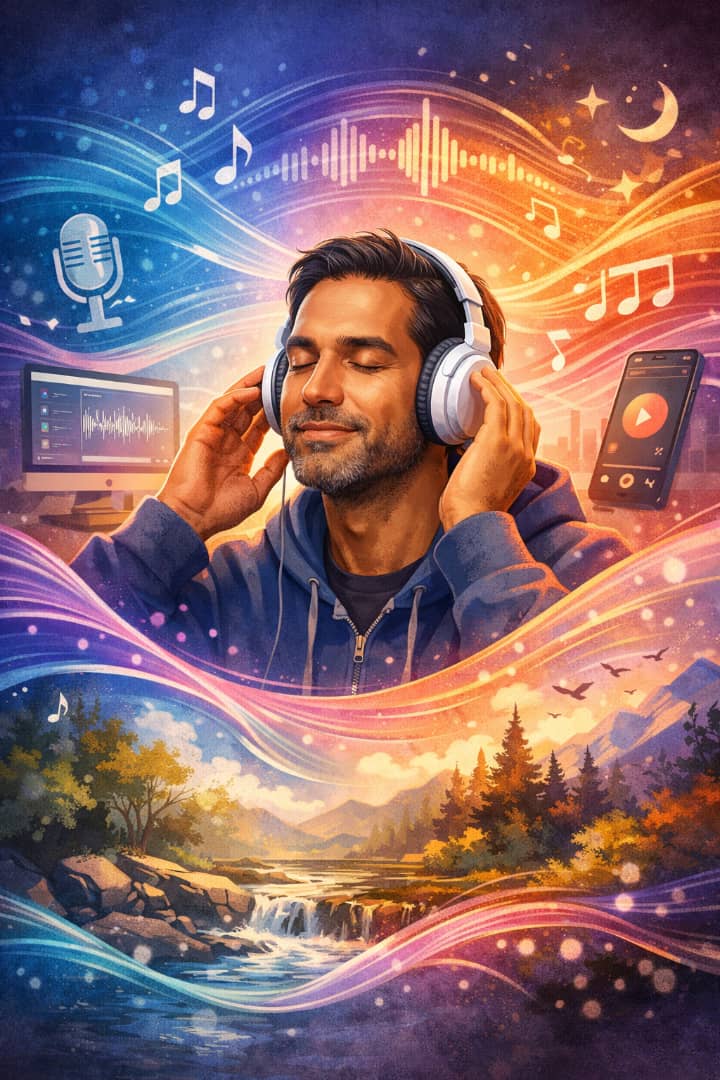
Hi guys, I am Festus and today, I will be exploring “My Ears Might Never Be Bored Again,” an article by Farhad Manjoo where he delves into the science behind a sensory revolution that many of us have unwittingly experienced and how the digital age has reshaped our relationship with sound. In the midst of a pandemic lockdown, when much of the world was confined indoors, Manjoo discovered that the auditory environment, once often an afterthought, had the power to transform his emotional, psychological, and even physiological states. What started as a refuge from the visual overload of screens soon revealed the profound potential of audio to shape his mood, productivity, and sense of well-being.
At the heart of Manjoo’s revelation lies the idea that sound has unique power over the human brain. While vision tends to dominate our attention, the auditory system plays a critical role in emotional regulation. For centuries, music has been linked to mood changes, from classical compositions that calm the mind to energetic beats that elevate alertness. Today, through the advent of digital technology, sound has become a tool that can be shaped and manipulated in ways that were previously unimaginable. Noise-canceling headphones, for example, allow us to remove unwanted environmental distractions, while personalized soundscapes, whether through music, nature sounds, or even white noise, can directly influence our cognitive function, focus, and stress levels.
During the lockdown, Manjoo became acutely aware of how sound could serve as a form of emotional regulation, a buffer from the chaos of family life. His early morning ritual of inserting AirPods Pro became a gateway to a sonic world that provided a sense of control over his environment. It wasn’t just about blocking out noise; it was about designing the sound around him. Music, podcasts, and audiobooks became a source of cognitive stimulation, but equally important were the periods of “digital silence”, a type of enhanced auditory environment that could encourage deeper thought and relaxation.
From a scientific perspective, this speaks to neuroplasticity, the brain's ability to adapts to experience by forming new neural connections throughout life. When we expose our brains to certain types of audio stimuli, we are not only absorbing information but also activating neural pathways that shape how we process emotions, creativity, and even problem-solving. The dopamine system, which is responsible for reward and motivation, is often activated by music, especially songs we enjoy. The pleasurable experience of hearing a favorite tune is not merely a fleeting emotional reaction but a biochemical event that can influence our mood and cognitive state.
Manjoo’s shift from his past relationship with music, where access was limited by physical media like CDs and cassettes, to his current experience with streaming services mirrors broader technological and neurobiological shifts. Digital music, which has democratized access to virtually all recorded sound, allows the brain to engage in constant novelty and variation. The reward system thrives on this novelty, which may explain why people, once devoted to a single genre or artist, now feel a heightened sense of discovery as they explore diverse musical landscapes. The instant access to nearly infinite musical genres and the algorithmic recommendations of platforms like Spotify further fuel this exploration, encouraging listeners to branch out and increase neural diversity by engaging with music across genres and cultural boundaries.
The concept of music no longer being confined by genre boundaries also has psychological and social implications. Research shows that music genres are, to some extent, cultural constructs. As global music platforms merge influences from hip-hop, pop, rock, and other genres, they reflect the interconnectedness of our modern world. This opens up new pathways for cultural understanding and social connection, as we can now more easily cross geographical and generational divides through shared musical experiences.
Manjoo’s reflections on the ubiquity of music and sound are a testament to how profoundly technology has altered the way we engage with the world. The science of sound, which was once relegated to specialized fields like psychology and neurobiology, is now part of everyday life, shaping our emotional states and cognitive functions in real time. The evolution of sound technology, from the basic function of hearing to the creation of augmented auditory environments, has transformed our daily lives. Smartphones, streaming services, and wireless headphones have redefined the auditory experience, making it more customizable, accessible, and influential than ever before.
Ultimately, Manjoo’s article is a celebration of how, in an increasingly sensory-overloaded world, sound has emerged as a tool of both cognitive and emotional empowerment. His conclusion that his ears will never be bored again highlights how the convergence of technology and neuroscience has opened up new dimensions of auditory experience, allowing us to craft personalized soundscapes that serve our psychological and physiological needs in ways that were once inconceivable.
.