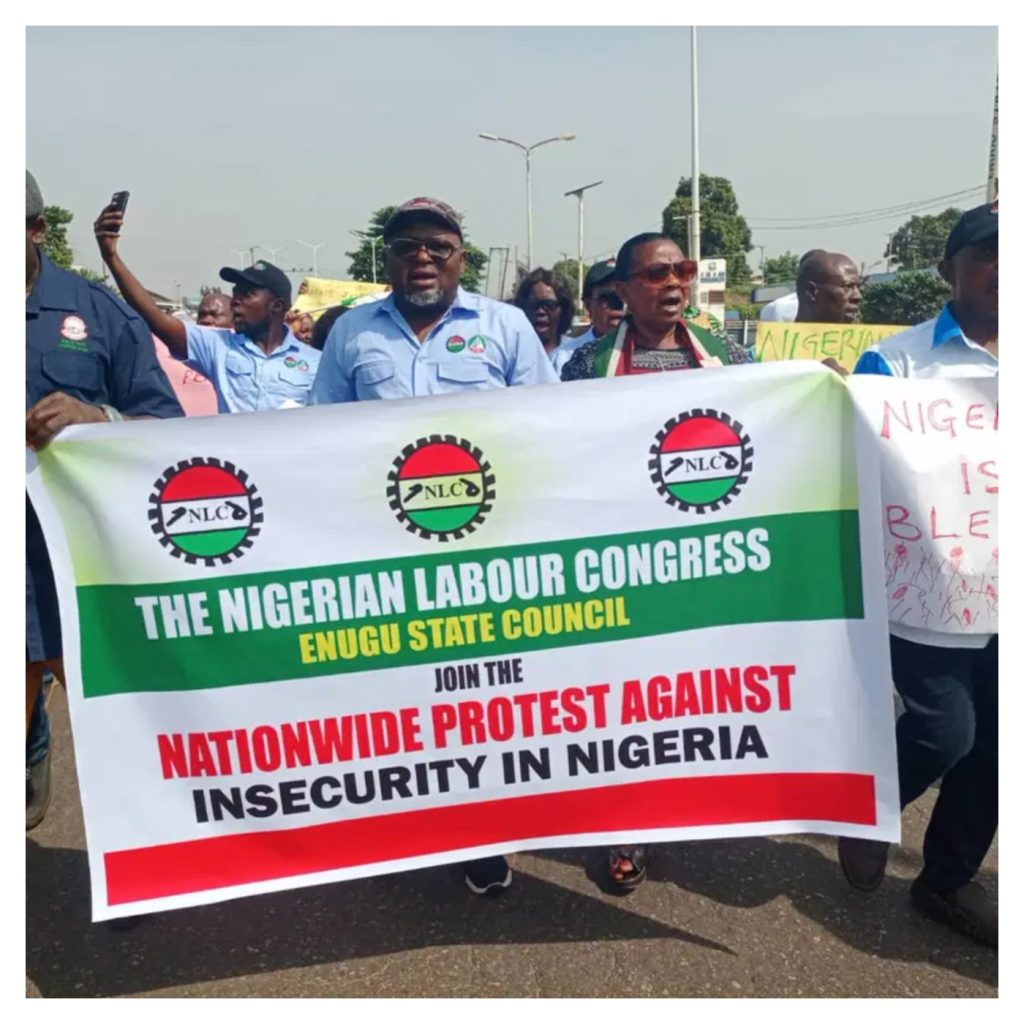
Nigeria Labour Congress (NLC) unleashed a wave of protests across major cities, causing widespread disruption and raising questions about the government’s grip on the nation. Led by NLC President Joe Ajaero and controversial activist Omoyele Sowore, the demonstrations in Abuja and Lagos quickly spiraled into a spectacle of anger and unrest.
Hundreds of protesters, brandishing placards and chanting slogans, descended on the NLC Secretariat in Abuja and the busy streets of Ikeja, Lagos. Their demands? An end to insecurity and economic hardship,issues that have dominated headlines but seen little real progress. The NLC, never shy of the spotlight, seized the moment to amplify their grievances, with Sowore and other civil society figures fanning the flames of public outrage.
The protests were triggered by a recent spate of kidnappings, including the high-profile abduction of 24 schoolgirls in Kebbi State,a tragedy that the NLC wasted no time in blaming squarely on government “inaction.” The union’s leadership accused authorities of abandoning their responsibilities, pointing to the withdrawal of security personnel before the attack as evidence of official negligence.
Despite a last-ditch effort by President Bola Tinubu to negotiate with the NLC, the union pressed ahead, dismissing the government’s attempts at dialogue as “empty promises.” In a dramatic statement to the media, Ajaero declared that kidnappers should face the death penalty, a sentiment echoed by angry protesters demanding swift and brutal justice.
But the protest wasn’t just about security. The NLC used the opportunity to air a laundry list of complaints, from unresolved agreements with the Federal Government to the soaring cost of living. The union painted a picture of a nation in crisis, blaming the government for every ill facing Nigerian workers and their families.
In a move that some critics called performative, the NLC framed the protest as a “civic duty,” urging Nigerians to join the cause and pressure authorities for reforms. The union’s leadership issued statements about the “alarming” rise in kidnappings and called for immediate action, but offered little in the way of concrete solutions.
The NLC also called on police and security agencies to “protect” protesters, even as their actions brought traffic to a standstill and heightened tensions in already volatile cities. “Solidarity is our shield,” the union proclaimed, as if slogans alone could solve Nigeria’s deep-rooted problems.
With high-profile figures like Sowore in attendance, the protest quickly became a media circus, drawing attention from across the country but leaving many wondering what, if anything, would actually change. The NLC’s show of force may have made headlines, but critics argue it did little to address the real issues facing ordinary Nigerians.
As the dust settles, the government faces mounting pressure to respond, but with the NLC’s confrontational tactics and the opposition’s grandstanding, it remains to be seen whether these protests will lead to meaningful reform,or just more chaos in the streets.