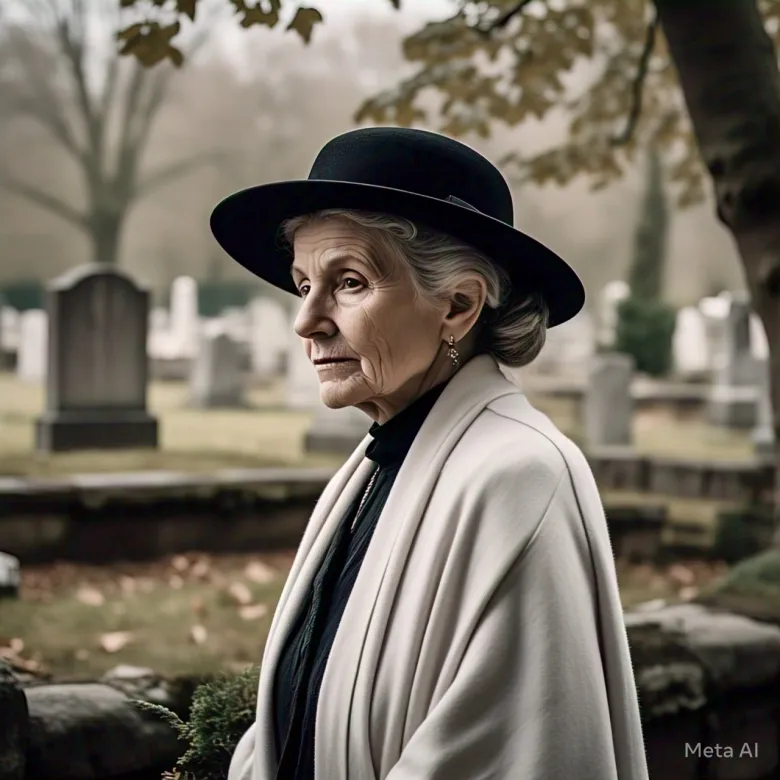
Margaret had given everything for her son, Nathan.
As a single mother, she had worked tirelessly—taking double shifts at the diner, sewing clothes late into the night, and skipping meals just to ensure he never had to. She had endured exhaustion, loneliness, and countless sacrifices, all for one reason: to see Nathan succeed.
And he had.
Nathan had been her pride, her joy, her reason for believing in tomorrow. He had studied hard, graduated with honors, and finally, after years of struggle, landed an interview for his first real job. Margaret had never been prouder. She had watched him leave that morning, dressed in his best suit, his eyes full of dreams.
But he never came home.
The call came just hours later—an accident, a reckless driver, a life stolen too soon.
Margaret collapsed to the floor, the phone slipping from her hand. How could the world be so cruel? After everything—after all the years of fighting, of struggling, of hoping—how could it all end like this?
The days after were a blur. The funeral passed like a nightmare, friends and family whispering their condolences, their words empty against the weight of her grief. She sat in Nathan’s room for hours, running her fingers over his textbooks, his neatly folded graduation gown, the framed picture of them at his university ceremony.
She had spent her whole life preparing Nathan for the future. Now, the future no longer existed.
For weeks, Margaret barely left the house. She had no more shifts to take, no one to cook for, no reason to wake up in the morning. The silence was unbearable.
Then, one afternoon, as she sat staring at Nathan’s unopened interview letter, she remembered his voice—so full of life, of hope.
"Mom, no matter what happens, we keep going, right?"
Margaret wiped her tears. Nathan had never been one to give up, and she knew—deep down—he wouldn’t have wanted her to.
Slowly, painfully, she began to heal—not by forgetting, but by sharing. She started visiting grief support groups, listening to others who had lost their loved ones. She spoke about Nathan, about his dreams, about the love that still lived within her.
Her pain became a source of strength, her story a comfort to those who had also lost their own reasons to keep going.
Years later, Margaret stood before a group of grieving parents, holding a photo of Nathan. Her voice, steady yet filled with emotion, carried through the room.
"I lost my son before he could live his dream," she said. "But I will carry his dream forward. I will live for him, and I will help others find their strength, just as he would have wanted."
And in that moment, Margaret realized—Nathan’s life hadn’t ended in that accident. It lived on, through her, through every person she touched.
Because love, even in loss, never truly fades.