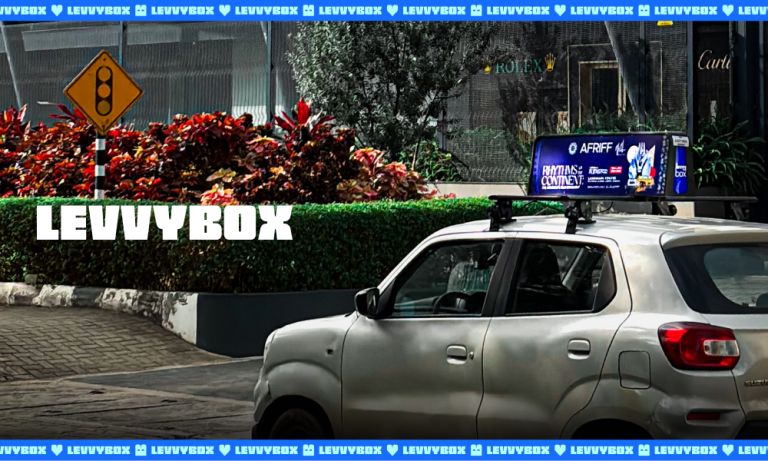
In the bustling, relentless rhythm of Lagos, time is a currency, and attention is its most valuable denomination. Where millions see in the city’s infamous gridlock only frustration and lost hours, the founders of Levvy Box perceive a vast, untapped marketplace. Their venture, born from the ashes of a stalled government-tech dream, now navigates the chaotic streets as a pioneering mobile advertising platform. It is a story not just of entrepreneurial pivot, but of profound adaptation a testament to the principle that in one of the world’s most dynamic urban landscapes, opportunity is not halted by traffic; it is amplified by it.
Levvy Box’s origin is a classic narrative of necessity breeding innovation. Conceived in 2023 as “Levvy,” the startup aimed to bring transparency and digital efficiency to Lagos’s complex ecosystem of transport levies. Its target was the manual, cash-based system managed by unions like the National Union of Road Transport Workers (NURTW). However, as co-founder and CEO Olamigoke Kumuyi recounts, the very transparency it promised threatened entrenched interests. “It threatened to eliminate the roles of various middlemen,” he explains, leading to institutional pushback and the collapse of the GovTech vision by September 2023. Faced with this impasse, the team faced a choice: abandon their efforts or find a new path. They looked not to the halls of government, but to the roads themselves, inspired by taxi-top advertising models in cities like New York. The core insight was salvaged: mobility held intrinsic value. If they could not reform its taxation, they could monetize its visibility.
This pivot positioned Levvy Box at the confluence of two powerful market trends. Globally, the Out-of-Home (OOH) advertising sector is experiencing a renaissance, growing 4-5.6% in 2024, fueled by post-pandemic urbanization and travel. In Nigeria, this market is projected to surge from $154.4 million to over $309 million by 2030. Simultaneously, digital advertising is becoming a saturated and expensive battleground, with the average cost-per-click on Google Ads rising 10% year-on-year. For brands, the challenge is no longer just reaching eyes, but capturing sustained attention in a fragmented media landscape. Levvy Box offers a compelling solution: turning the city’s moving vehicle fleet into a network of glowing, unavoidable billboards. As Kumuyi notes, the demand from brands was clear and loud: “They wanted more reach, more visibility everywhere.”
The journey from concept to viable business, however, was a humbling lesson in localization. Early experiments with digital rooftop screens, a direct copy of international models, failed spectacularly. “Nigeria humbled us,” Kumuyi admits. The brutal combination of heat, poor roads, erratic driving, and power issues warped components and shattered illusions. This failure was a catalytic moment. It forced Levvy Box to stop thinking of itself as purely an advertising company and reconceive as an operations and distribution business. The fundamental question shifted from “How do we sell ads?” to “How do we keep a physical product functioning and reliably circulating in Lagos?” The answer lay in ditching fragile digital displays for rugged, purpose-built static boxes, manufactured to custom specifications after relentless prototyping for aerodynamics, durability, and optimal viewing angles.
This operational focus became the bedrock of their model. Distribution was unlocked not by owning fleets, but through partnerships with mobility operators and a growing network of over 1,000 independent drivers. The company’s mettle was tested during its campaign for the prominent Moonshot tech conference. When widespread driver strikes across ride-hailing platforms threatened the campaign, Levvy’s deep engagement with informal driver communities allowed it to rapidly scale its active fleet, ensuring execution and proving the resilience of its network. This episode underscored that Levvy Box’s asset is not merely hardware, but a trusted, scalable human logistics layer.
Beyond rooftop boxes, Levvy Box developed a second, more intimate product: in-car advertising. Again forgoing fragile screens, the company installed low-maintenance physical placements within a passenger’s direct line of sight. This creates a captive, unskippable experience a rare commodity in modern marketing. “It’s just you and the brand for the entire journey,” Kumuyi observes. To address the perennial OOH challenge of measurement, Levvy leverages mobility data partnerships to provide clients with detailed metrics on kilometers traveled, exposure time, and estimated viewership, lending a data-driven credibility to the physical world of billboards.
Despite its rapid traction 1.42 million minutes on road, 2.35 million minutes of brand view time in just five months Levvy Box charts a deliberately independent course. It remains bootstrapped, financing growth through revenue and reinvestment, a choice that prioritizes sustainable control over explosive, investor-driven scaling. Its ambitious Project M3 aims to deploy 1,000 boxes by the end of 2026, and the upcoming “Big Beautiful Box” promises brands greater creative freedom. Yet, challenges loom on the horizon: the constant wear-and-tear of Lagos’s streets, a competitive and sometimes bureaucratic regulatory environment led by ARCON, and the ever-present need to prove Return on Investment to brands accustomed to digital analytics.
In conclusion, Levvy Box’s evolution from a stifled GovTech initiative to a mobile advertising contender is a masterclass in entrepreneurial agility.