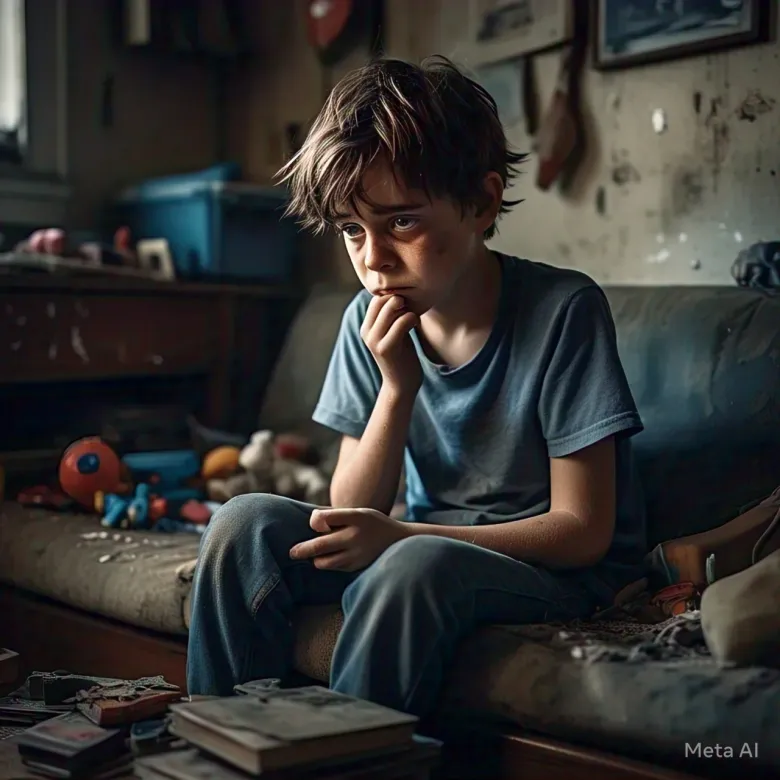
Liam was twelve when it happened.
It was supposed to be a safe place—his neighbor’s house, where he often went after school while his father worked late shifts. But one evening, safety turned into something unspeakable. The woman who had always greeted him with warm smiles and kind words did something he didn’t have the words for.
He ran home that night, scrubbing his skin raw in the shower, hoping to wash away what had happened. But the filth wasn’t on his body—it was in his mind, in the way his chest felt tight, in the way his stomach curled with shame.
He thought about telling his father, but the words stuck. *Who would believe me?*
In their town, boys were expected to be strong. Men laughed at the idea of a boy being abused, dismissed it as weakness, as something impossible. He heard it in passing conversations, in the way older boys at school joked about how “a guy can’t be a victim.”
So, Liam stayed silent.
The nightmares came first. Then the panic attacks. Then the anger, the bitter frustration of carrying something too heavy for his small shoulders. He pulled away from his friends, flinched when anyone touched him, and buried himself in schoolwork just to keep his mind from drowning.
One day, during a class discussion on consent, the teacher asked if men could be victims, too. A boy at the back scoffed. “Come on, that’s not real. If a guy says he got abused, he probably wanted it.” The class erupted in laughter.
Something inside Liam snapped.
He stood up, his voice shaking. “That’s not true.”
The laughter died.
His heart pounded, his hands clammy, but he kept going. “Boys don’t always want it. Sometimes, we’re scared. Sometimes, we say no, but no one listens. And when we try to speak up, people laugh.” He swallowed hard. “You don’t know what it’s like to feel helpless. To be afraid. To wonder if you’ll ever feel safe again.”
Silence settled over the room. The teacher’s eyes softened. “Liam,” she said gently, “do you want to talk after class?”
For the first time, he did.
The conversation that followed changed everything. His teacher believed him. She helped him report it. The school counselor supported him through the pain. And soon, word spread—about Liam, about the truth people refused to see.
His story rippled through the town. Parents began talking to their sons, realizing that silence didn’t mean safety. The local community center started programs to educate boys about consent, to give them a space to speak, to remind them that their pain was real, too.
Liam still carried his scars, but they no longer defined him. He stood before his community, his voice steady, telling his story so no boy would feel as alone as he once did.
And for the first time, people listened.