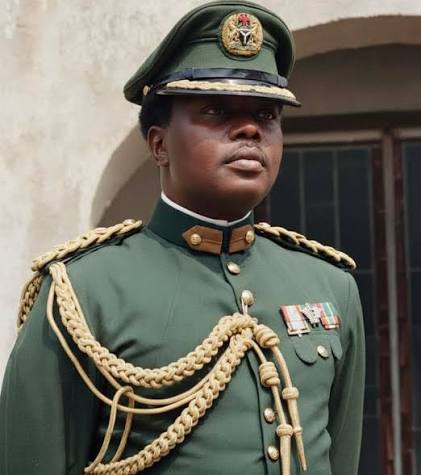
President Bola Tinubu has lauded the late Head of State, General Murtala Ramat Muhammed, as a soldier with an unmistakably democratic spirit whose brief rule reshaped Nigeria’s political trajectory and strengthened Africa’s liberation movements.
Speaking through the Secretary to the Government of the Federation, Senator George Akume, at the 50th Murtala Muhammed International Lecture and Leadership Conference in Abuja, Tinubu described the late leader as a patriot who combined courage, moral clarity and an unyielding commitment to public service.
According to the president, Muhammed carried “democratic blood in his veins,” pointing to the transition programme he initiated to return Nigeria to presidential democracy after years of military rule. Tinubu noted that, despite spending barely 200 days in office, Muhammed set in motion reforms that still define the Nigerian state.
He recalled the late general’s uncompromising stance against graft, including the mass purge of corrupt and underperforming public officials, which signalled a new ethic of accountability in government. Those anti-corruption measures, Tinubu said, remain a reference point for Nigerians seeking integrity in public life.
The president also underscored Muhammed’s role in Africa’s decolonisation struggles, highlighting Nigeria’s support for liberation movements in Angola, Namibia, Mozambique, Zimbabwe, Guinea-Bissau and the fight against apartheid in South Africa. In Tinubu’s telling, Muhammed’s foreign policy projected Nigeria as a bold, principled voice for African freedom and dignity.
Former President Olusegun Obasanjo, who succeeded Muhammed after his assassination in 1976, told the gathering that one of Muhammed’s greatest legacies was his deliberate grooming of a successor. Obasanjo said the late leader’s mentorship prepared him to complete the transition to civilian rule, a responsibility many leaders fail to anticipate.
Former Vice President Yemi Osinbajo linked Muhammed’s Pan-African vision to contemporary developments, arguing that the “Africa coming of age” he championed is visible in the African Continental Free Trade Area and the continent’s growing profile in entrepreneurship, innovation and manufacturing.
Former Malawian President Joyce Banda described Muhammed as a personal hero and a model of selfless leadership, noting that he neither enriched himself nor wavered in his commitment to the African cause.
General Murtala Muhammed, who came to power in a bloodless coup in 1975, was killed in an attempted coup the following year. Yet, as the tributes at the anniversary lecture made clear, his reformist zeal, anti-corruption drive and Pan-African convictions continue to resonate across generations.