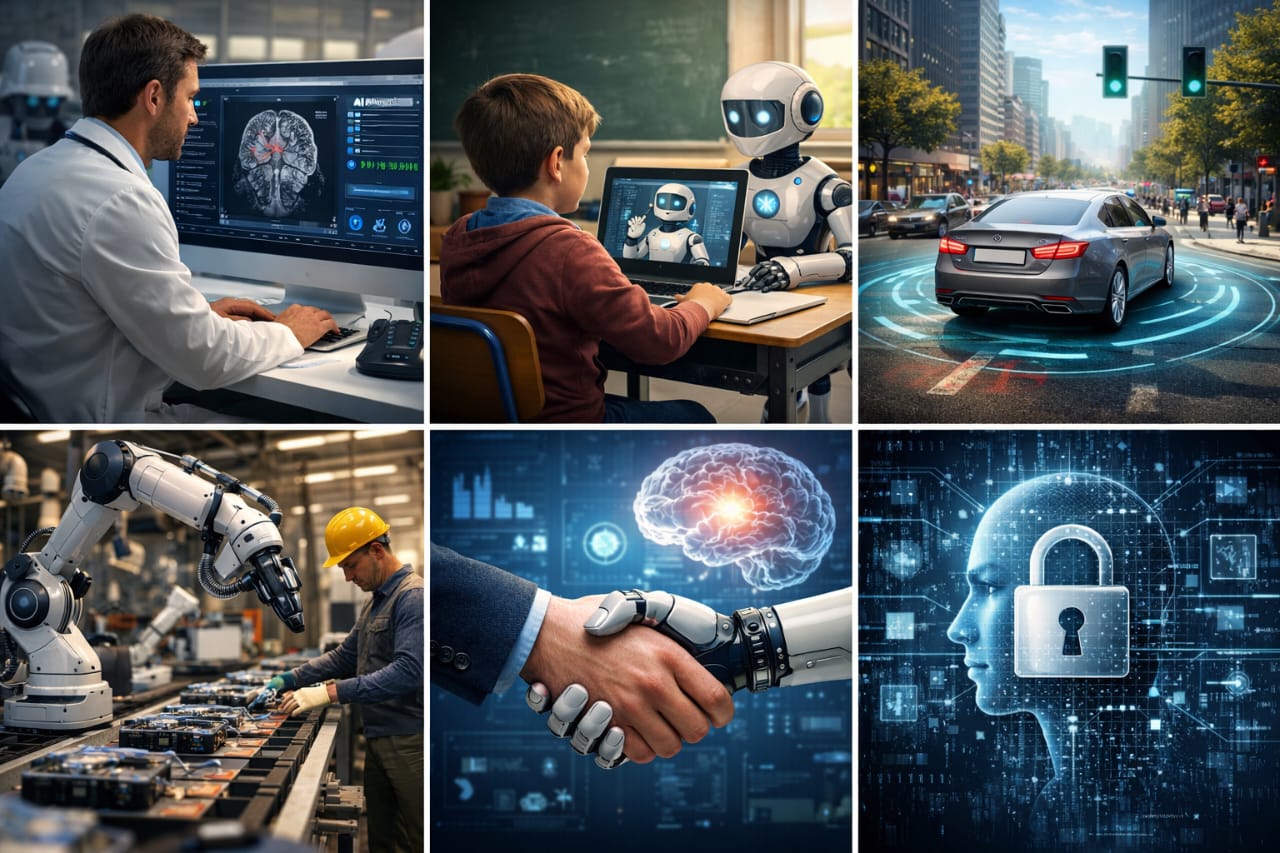
The Role of Artificial Intelligence in Modern Society
Artificial Intelligence (AI) refers to computer systems and machines that can perform tasks requiring human-like intelligence — such as learning, reasoning, problem-solving, language understanding, and decision-making. Its growth over the past decade has been rapid, transforming not only technology but the very way we live, work, and interact with the world. AI has become one of the most influential innovations of the 21st century, affecting nearly every aspect of human life.
1. AI in Healthcare:
One of the most significant benefits of AI is its impact on healthcare. AI algorithms can analyze medical images like X-rays and MRIs with remarkable precision, often detecting diseases earlier and more accurately than traditional methods. This leads to faster diagnoses and better treatment outcomes. AI also helps in developing personalized treatment plans by analyzing patient data and predicting responses to therapies.
AI’s role in global health equity is currently debated: for example, advocacy groups like the NAACP are urging “equity-first” standards to ensure AI diagnostics do not worsen racial disparities in healthcare.
2. Economic Growth and the Future of Work:
AI is a major driver of economic innovation. It boosts productivity by automating routine tasks, enabling businesses to operate more efficiently and at a greater scale. AI supports new industries from autonomous vehicles to data analytics creating jobs that require advanced technical skills.
However, automation can also displace workers, especially in sectors like manufacturing, customer service, and transportation. Studies suggest that millions of jobs may be automated in coming years, though many new opportunities will arise in AI development, data science, and cybersecurity.
3. AI in Education:
AI is transforming education by personalizing learning. Intelligent tutoring systems adjust to individual student needs, offering tailored explanations and practice problems. AI tools can also support teachers by grading assessments, identifying learning gaps, and recommending supplementary resources.
These technologies help improve student engagement and outcomes, especially where access to quality teaching is limited.
4. Transportation and Smart Infrastructure:
AI is at the heart of developments like self-driving cars, which use sensors and algorithms to navigate roads and avoid hazards. This promises to reduce traffic accidents, increase accessibility, and optimize travel efficiency. AI also improves logistics and supply chains by analyzing real-time data to optimize deliveries and reduce fuel use.
5. AI Enhancing Everyday Life
AI improves daily life through technologies such as:
Virtual assistants (e.g., Siri, Alexa)
Smart home systems that manage energy use
Recommendation systems on streaming and shopping platforms that personalize content
These applications save time, enhance convenience, and make technology more intuitive for users.
6. Challenges and Ethical Considerations
Despite its advantages, AI raises several serious concerns:
a. Job Displacement
Automation can replace humans in routine or manual jobs, leading to unemployment or economic instability if workers are not reskilled for new roles.
b. Bias and Fairness
AI systems learn from data — and if the data reflect societal biases, AI can perpetuate or amplify discrimination. This is particularly problematic in areas like hiring, lending, and law enforcement.
c. Privacy and Security
AI often relies on large datasets, which can threaten individual privacy if personal information is collected or used without consent. AI systems are also targets for cyberattacks.
d. Transparency and Accountability
Many AI algorithms act as “black boxes,” making it hard for users to understand how decisions are made. This raises issues of accountability when AI decisions lead to harm.
e. Societal Inequality:
Experts warn that AI could widen global disparities if advanced technologies remain concentrated in wealthy nations and communities without broad access to infrastructure and education.
7. Governance and Responsible AI:
There is increasing global discussion about how to govern AI responsibly. Leaders and policymakers are advocating for ethical frameworks that ensure AI serves humanity’s best interests without compromising human rights, fairness, or safety. For example, governing principles emphasize transparency, accountability, and community participation in AI deployment.
Even global figures like Pope Leo have urged that AI be regulated to support human creativity and wellbeing, stressing that AI should serve people rather than replace them.
In conclusion, Artificial Intelligence is one of the most transformative technologies of our time. It promises to revolutionize healthcare, transportation, business, and education, while making everyday life more efficient and personalized. However, the power of AI also brings ethical, economic, and social challenges. For AI to benefit global society meaningfully, it must be developed and governed responsibly — with fairness, privacy, and equity at the forefront. �
JIET Jodhpur
personalized. However, the power of AI also brings ethical, economic