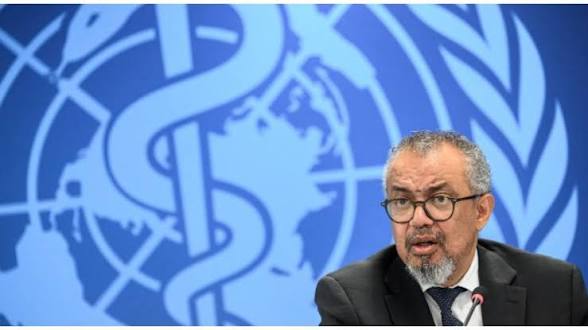
The head of the World Health Organization has hailed Uganda’s rapid and coordinated response to the Ebola outbreak spilling over from the neighbouring Democratic Republic of the Congo, calling the country a model for managing cross-border health emergencies.
Speaking in Kampala after meetings with senior officials, including President Yoweri Museveni, WHO Director-General Tedros Adhanom Ghebreyesus said Uganda’s health system had shown “very vigilant” surveillance and decisive leadership in limiting transmission.
Uganda has so far confirmed 19 Ebola cases linked to the outbreak in eastern DRC, 15 of them imported and four arising from local contacts. Despite the threat, Tedros noted that the case fatality rate in Uganda remains below one percent, a figure he attributed to the country’s long experience with outbreaks and its investment in preparedness.
One of the most visible measures was the government’s decision to cancel Martyr’s Day celebrations, an annual religious event that draws huge crowds from across the region. Health officials said the move sharply reduced the risk of mass transmission at a time when imported cases were still being detected.
The WHO has deployed experts and helped train dozens of Ugandan health workers in case detection, infection prevention and clinical care. According to Daniel Kyabayinze, Director of Public Health at the Ministry of Health, Uganda plans to rotate teams of about 40 health workers at a time and establish four dedicated Ebola treatment units.
To speed up diagnosis, two laboratories have already been set up along the border with DRC, in Mpondwe and Arua, allowing samples to be tested close to where suspected cases are identified. Officials say this has cut waiting times and enabled faster isolation of patients and monitoring of contacts.
Tedros stressed that the focus must remain on tackling the epicentre of the outbreak in DRC’s northeastern Ituri province, a remote and insecure region where armed groups and poor roads complicate the response. He warned against blanket travel or trade restrictions, arguing they damage economies without stopping the virus. “Addressing the epicentre is the solution,” he said.
The current outbreak, driven by the Bundibugyo strain of Ebola for which there is no specific vaccine or treatment, is the 17th to hit DRC. Ebola, spread through close contact with bodily fluids, has killed more than 15,000 people in Africa over the past five decades.
WHO and the Africa Centres for Disease Control and Prevention are backing a regional plan worth hundreds of millions of dollars to support surveillance, treatment and community engagement. Tedros said that with sustained collaboration, the outbreak can be brought under control and further international spread prevented.