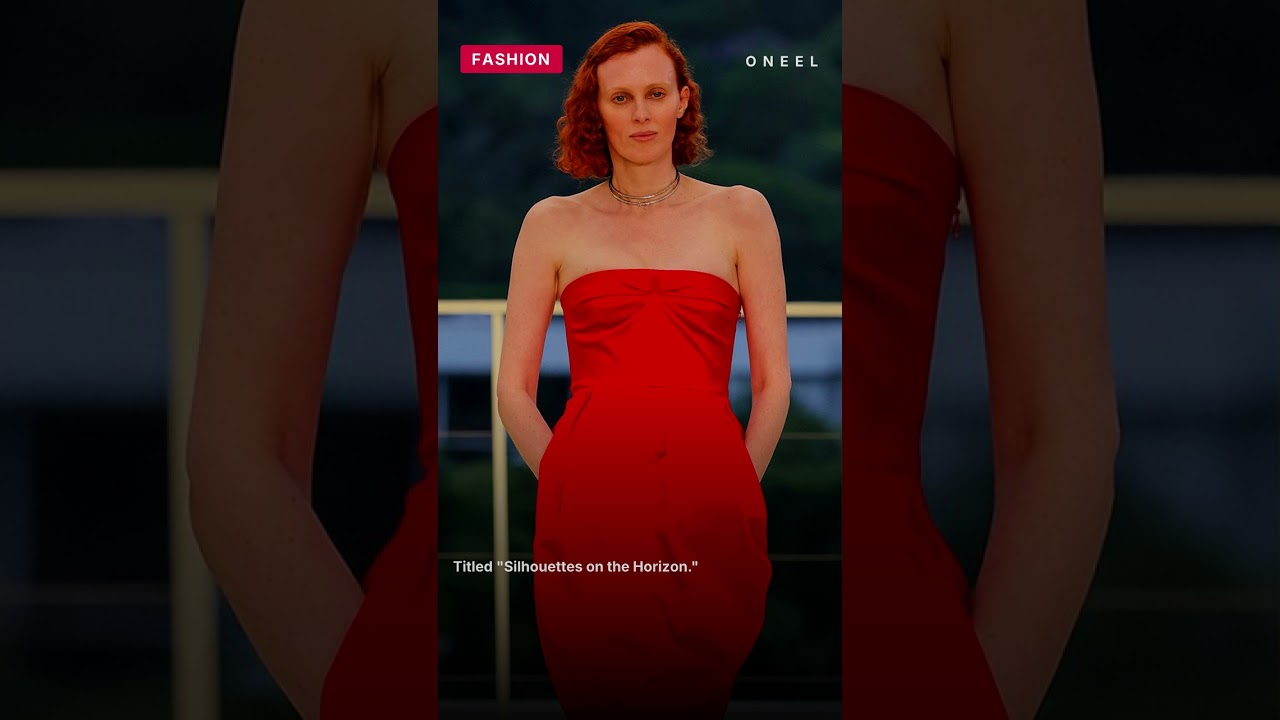
The second chapter of Hermès’s fall/winter 2026 women’s collection unfolded high above Los Angeles, where the manicured calm of Bel Air became an unlikely stage for a meditation on movement. Under the eye of creative director Nadège Vanhee, the house traded Parisian mystery for California softness, reimagining its codes through the lens of performance and dance.
Guests arrived by golf cart, winding through the hills to a hidden pavilion. A sculptural installation bearing the words Silhouettes on the Horizon framed the entrance, signaling a show preoccupied less with spectacle than with the way clothes inhabit space. Inside, a wash of butter-yellow light set the tone: intimate, warm, and quietly theatrical.
The collection’s opening looks echoed that glow. Dresses in “jaune fauve” skimmed the body, their airy panels catching the breeze like choreography mid-step. Vanhee’s proposition was clear: garments should move with the wearer, not cling to or constrain her. Seams traced the body like lines of a score, while pleats and godets unfurled with each stride, turning walking into a kind of everyday performance.
As the show progressed, the palette tracked the sky outside. Yellow deepened into “rouge tango,” a saturated red that mirrored the last flare of sunset. Here, the silhouettes sharpened: wrap coats cinched at the waist, satin skirts cut on the bias, and elongated knits that recalled a dancer’s warm-up layers. The final passage, in “vert imperial,” brought in inky greens and near-black tones, suggesting nightfall and the closing of a chapter.
Dance was a constant reference, but never literal costume. Ballet-inspired wrap outerwear, second-skin tops, and fluid trousers suggested rehearsal rooms and backstage corridors, while leather biker jackets and layered coats hinted at the moment a dancer steps out into the city. The tension between discipline and ease gave the collection its quiet drama.
Hermès’s equestrian heritage surfaced in precise details: breeches reimagined in supple fabrics, tight riding pants paired with calf-hugging boots, and saddle-like seaming on tailored coats. On the accessories front, new bags expanded the house’s language—structured east-west shapes, oversized tapered totes, and relaxed hobo styles—each designed to swing and sway in rhythm with the body.
In Bel Air, Hermès didn’t just present clothes; it staged a study of how a woman moves through her day, her city, and her own story—one silhouette at a time on the horizon.