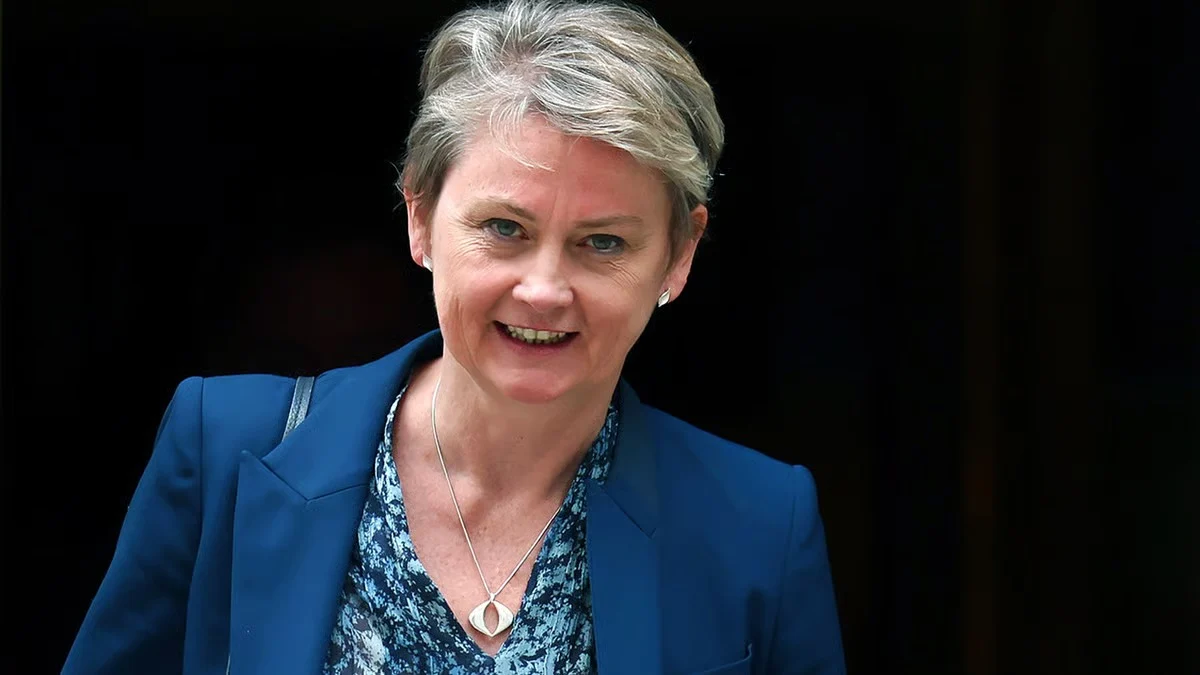
Britain has declined to sign up to former United States President Donald Trump’s new international initiative, the so‑called “Board of Peace,” with UK foreign minister Yvette Cooper confirming that London will not take part in the high‑profile signing ceremony in Davos.
The event, hosted on the sidelines of the World Economic Forum in the Swiss resort, is intended to launch the founding charter of Trump’s latest global project: a body that he claims will help resolve international conflicts and reshape the architecture of global diplomacy. But the UK government has stepped back, citing both legal concerns and deep unease over the proposed involvement of Russian President Vladimir Putin while Russia’s war in Ukraine continues.
“There’s a huge amount of work to do, we won’t be one of the signatories today,” Cooper told the BBC in an interview from Davos. Her remarks make Britain one of the most prominent US allies to publicly distance itself from the initiative at the moment of its unveiling.
At the heart of London’s hesitation is the nature of the “Board of Peace” itself. According to information shared with invited governments, the body is framed as a treaty‑based organisation with a sweeping mandate to intervene diplomatically in conflicts around the world. Permanent membership reportedly carries a price tag of around $1 billion, a figure that has raised eyebrows among diplomats who see it as an unusually commercial approach to global peace‑making.
Cooper stressed that the UK’s concerns are not merely financial or procedural. She pointed to the legal implications of signing up to a new treaty‑level body whose powers and relationship to existing institutions, such as the United Nations, remain unclear.
“Because this is about a legal treaty that raises much broader issues, and we do also have concerns about President Putin being part of something which is talking about peace, when we have still not seen any signs from Putin that there will be a commitment to peace in Ukraine,” she said.
Her comments reflect a broader unease among Western governments about any initiative that appears to rehabilitate Putin on the international stage while Russian forces remain entrenched in Ukrainian territory and missile and drone attacks continue. For London, which has been one of Kyiv’s staunchest backers, the optics of joining a “peace” body alongside Moscow’s leader are politically toxic.
Invitations to join the Board of Peace were sent to dozens of world leaders in the run‑up to Davos. The project was initially trailed as a mechanism to coordinate the reconstruction of Gaza after the devastating conflict there, but the draft charter circulated to capitals appears to go much further. Rather than limiting itself to a single region, the board is described as a global conflict‑resolution platform with ambitions that some diplomats say verge on rivaling the United Nations itself.
That perceived overlap has already drawn criticism from several US allies. French officials, in particular, have privately questioned the wisdom of creating a parallel peace architecture that could undermine or duplicate the work of the UN Security Council, the International Court of Justice and other established multilateral bodies. Some European diplomats have also expressed concern that the Board of Peace could become a vehicle for power politics, dominated by a handful of wealthy states willing to pay the steep membership fee.
Trump, however, has promoted the initiative as a bold alternative to what he has long portrayed as a sclerotic and ineffective UN system. In public remarks at Davos, he has argued that a leaner, better‑funded and more “results‑oriented” body could break deadlocks that have stymied traditional diplomacy, from the Middle East to Eastern Europe.
In a move that further unsettled Western capitals, Trump announced that Putin had agreed to join the Board of Peace, presenting it as proof that the new body could bring adversaries to the same table. The Kremlin, however, has been more cautious, saying only that it is still studying the invitation and the terms of participation. That discrepancy has added to the sense of uncertainty surrounding the project’s real level of support.
For the UK, the question is not only whether the Board of Peace can work, but what it would signal. British officials have repeatedly argued that any credible peace framework must be grounded in international law and must not reward aggression. Since Russia’s full‑scale invasion of Ukraine, London has pushed for sanctions, military aid to Kyiv and war‑crimes investigations, insisting that Moscow cannot be treated as a normal partner while the conflict rages.
To sign a founding charter alongside Putin, British diplomats fear, would risk blurring that message. It could also complicate the UK’s own legal and treaty obligations, especially if the Board’s decisions or dispute‑resolution mechanisms clashed with those of the UN or European institutions to which Britain already belongs.
The $1 billion membership fee has become another point of contention. Supporters of the Board argue that a substantial financial commitment is necessary to fund rapid‑response mediation teams, reconstruction packages and security guarantees that could make peace deals stick. Critics counter that tying influence in a peace body so directly to money risks turning conflict resolution into a pay‑to‑play arena, where wealthier states can buy disproportionate sway over outcomes.
Diplomatic observers note that the UK’s refusal to sign at Davos does not necessarily mean it will never engage with the Board of Peace. Cooper herself left the door ajar, emphasising that London would continue to examine the details and consult with allies. But for now, Britain is aligning with those who believe that the initiative is moving too fast, with too many unanswered questions about governance, accountability and the role of controversial leaders.
The episode also underscores a broader tension in global diplomacy: the growing proliferation of ad hoc coalitions, clubs and councils that sit alongside, and sometimes in competition with, the UN system. From climate alliances to security partnerships, states are increasingly experimenting with new formats when traditional institutions appear gridlocked. The Board of Peace is one of the most ambitious and contentious of these experiments, precisely because it seeks to occupy the core terrain of war and peace.
As the Davos ceremony goes ahead without the UK’s signature, the Board’s backers will be keen to showcase a roster of founding members that still looks impressive. Yet the absence of a key US ally like Britain, combined with skepticism from other European partners, highlights the political and diplomatic headwinds the project faces.
For now, London’s message is clear: peace initiatives cannot be divorced from the realities on the ground, especially in Ukraine. Until there is tangible evidence that Moscow is prepared to end its war and respect international law, the UK is unwilling to share a new “peace” platform with the Kremlin, no matter how grand the promises or how glittering the Davos stage.