Whenever anyone in the house caught a cold, Grandma already knew what to do.
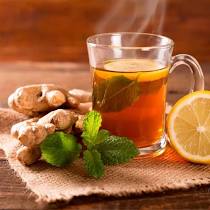
Before anyone could finish saying, “I don't feel well,” she would disappear into the kitchen and return with a steaming cup of ginger tea.
The smell would arrive first—the sharp, warm scent of fresh ginger.
She would tell you to hold the cup with both hands, take it slowly, and get some rest.
As children, we didn't really understand why she always made it. We simply knew that whenever we felt miserable, Grandma's ginger tea somehow made the day feel a little better.
Years later, we learned that the tradition wasn't just about the warmth of the drink. Ginger has been used for generations as a food and traditional remedy, particularly for digestive discomfort and nausea.
🌿 What goes into ginger tea?
The basic version is wonderfully simple:
- Fresh ginger root
- Water
- Honey, optional
- Lemon, optional
Some people also add cinnamon or cloves for extra flavour.
☕ How to make it
Wash and slice a small piece of fresh ginger. Add it to a pot of water and simmer for about 10–15 minutes.
Strain it into a cup and allow it to cool slightly. Add a little honey or lemon if you like.
That's it.
❤️ What are the potential benefits?
Ginger contains natural compounds called gingerols, which have antioxidant and anti-inflammatory properties. Ginger may also help with nausea and digestive discomfort.
And sometimes, the benefit is simpler: a warm, comforting drink can encourage you to slow down, rest, and take care of yourself.
Of course, ginger tea isn't a cure for colds or other illnesses, and it shouldn't replace medical care when you need it. But as a comforting drink, it has earned its place in many homes.
Maybe that's why Grandma never needed a scientific explanation.
She simply knew that when someone wasn't feeling their best, a warm cup of ginger tea was a good place to start.