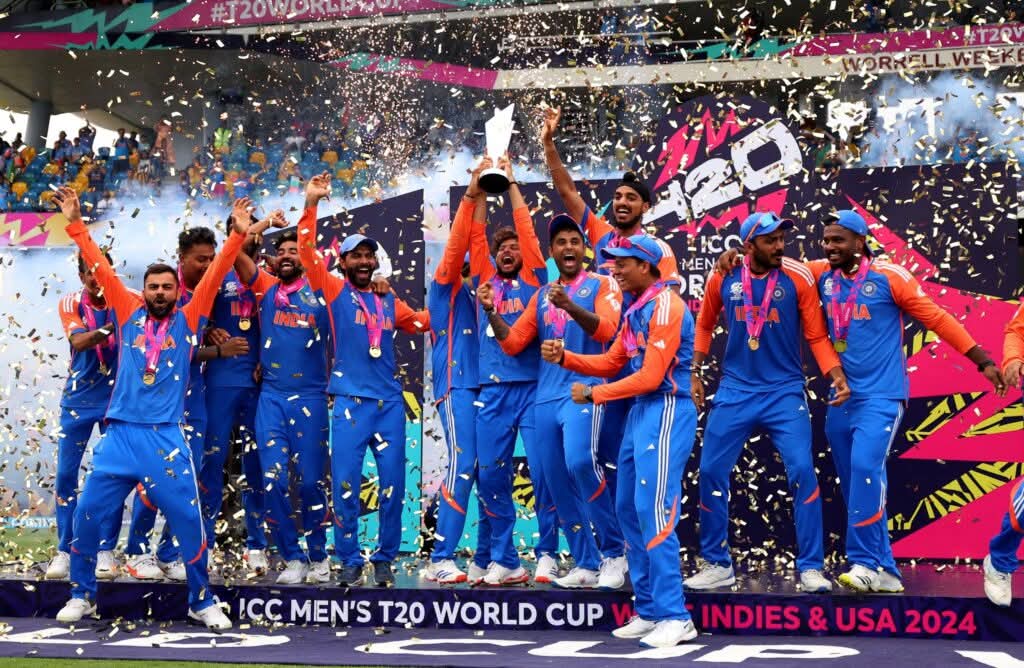
India’s men’s cricket team will receive 14 million dollars from the Board of Control for Cricket in India (BCCI) after winning a record third T20 World Cup title. The payment highlights both the team’s on-field success and the financial capacity of Indian cricket administration.
India, acting as co-hosts and entering the tournament as clear favourites, defeated New Zealand by 96 runs in the final in Ahmedabad. This result made India the first team to retain the T20 World Cup and the first to win the tournament on home soil, reinforcing their position as a leading side in the T20 format.
Cricket in India functions as a major unifying activity across linguistic, religious and regional lines. Leading players are widely recognised public figures, and national team victories often generate large-scale public engagement and collective response.
When announcing the 14 million dollar reward, the BCCI described the campaign as a historic achievement. The board acknowledged the contributions of players, coaches, analysts, medical staff and selectors, and stated that the financial reward will be distributed across the entire contingent, not limited to the playing XI.
BCCI secretary Devajit Saikia stated that the victory has placed India among the most successful teams in T20 history. This assessment is supported by India’s repeated deep runs in global tournaments and the volume of talent produced through domestic competitions and the Indian Premier League.
Beyond the BCCI bonus, the team will receive 2.34 million dollars from the International Cricket Council as official tournament prize money. New Zealand, as runners-up, will receive 1.17 million dollars, consistent with ICC’s structured prize distribution for major events.
Following the win, large numbers of people gathered in public spaces across Indian cities and towns. Observed activities included flag-waving, use of national colours, music, and fireworks, with extensive sharing of images and commentary on social media platforms.
The scale of financial incentives attached to this tournament illustrates the commercial growth of the T20 format. For many observers, however, the primary takeaway is that the Indian team met high pre-tournament expectations and converted home advantage into a clear competitive statement.
.jpeg?alt=media&token=96b327a5-8e62-4ed1-a078-308aff149ed1)