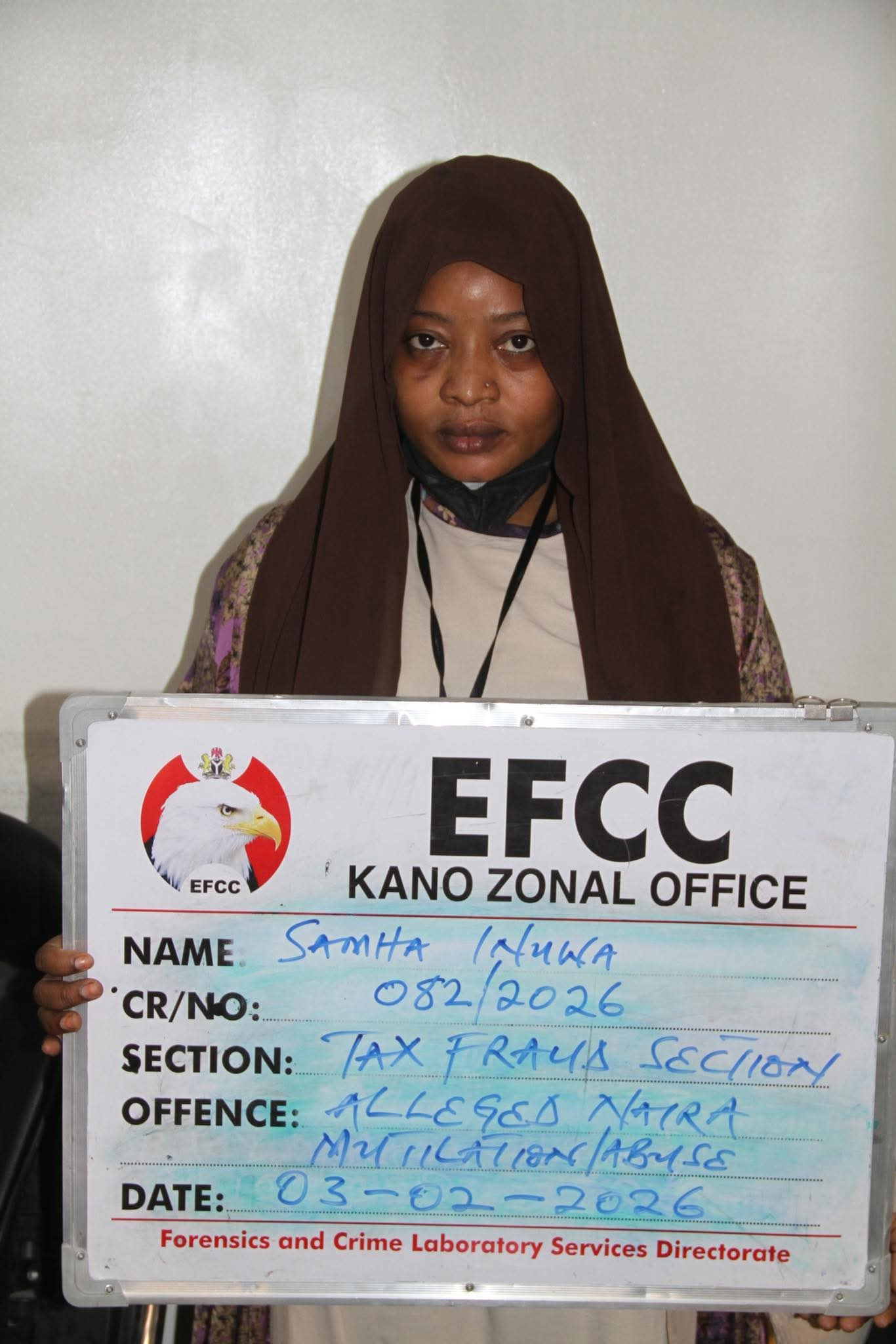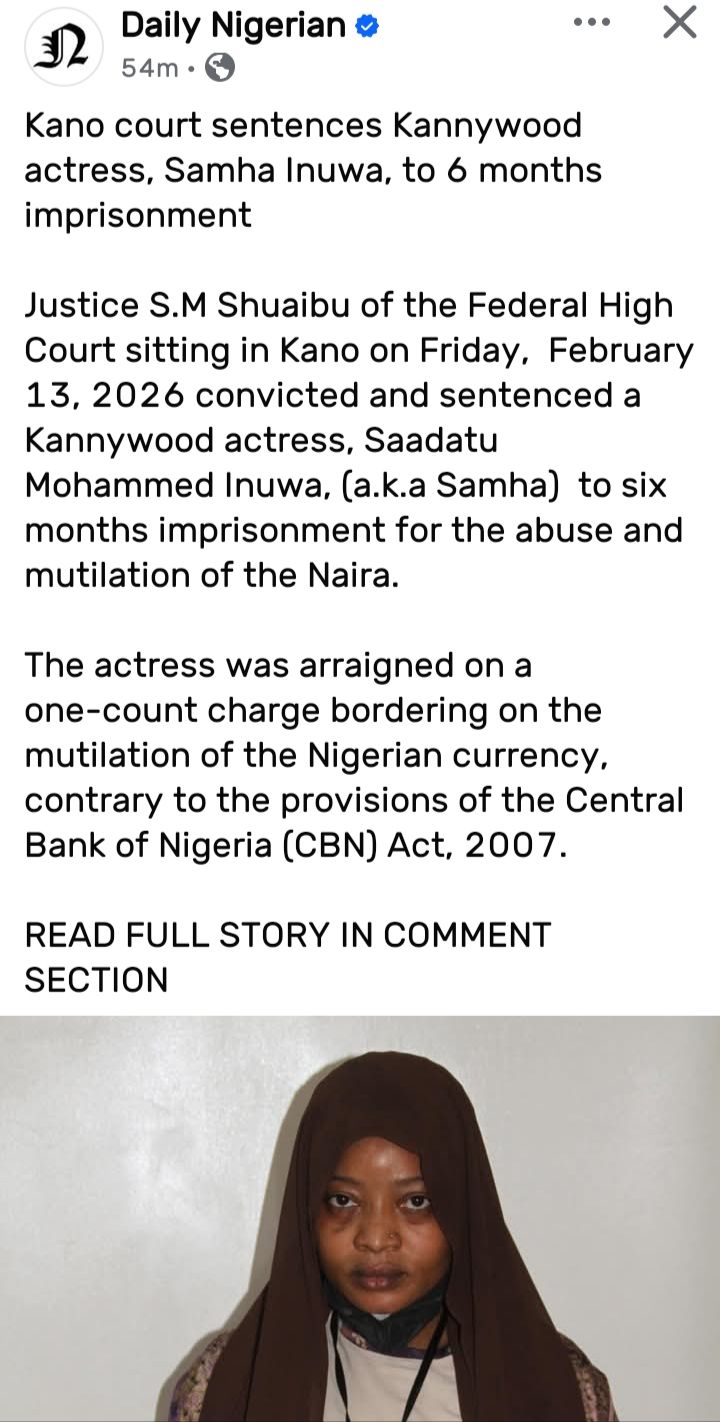
This case reflects a troubling pattern of selective justice in Nigeria. The conviction and six-month sentence handed to Kannywood actress Samha Inuwa for abuse of the naira may, in formal terms, align with the provisions of the Central Bank of Nigeria Act, 2007. However, the broader social context raises difficult questions about fairness and consistency in enforcement.
In Nigeria today, the spraying and mishandling of naira notes is widespread. It occurs openly at weddings, naming ceremonies, political rallies, and other social events. Videos circulate daily on social media showing individuals stepping on, tearing, or throwing currency into the air. These actions are neither concealed nor rare. Yet arrests and convictions in such instances are limited. This uneven pattern creates the impression that enforcement is selective.
The law is clear. Section 21 of the Act criminalises the abuse and mutilation of the national currency. If the state intends to apply this provision strictly, it must do so across board. Justice, to retain legitimacy, must be predictable and consistent. When one individual is prosecuted while many others who engage in similar conduct are ignored, the principle of equality before the law is weakened.
There is also the issue of proportionality and visibility. Public figures often attract greater scrutiny. Their actions are amplified in the media. However, legal responsibility should not depend on fame or public attention. The rule of law requires neutrality. Enforcement that appears targeted at a few visible individuals, while everyday violations continue without consequence, risks eroding public confidence in judicial institutions.
Deterrence is often cited as justification for such prosecutions. A high-profile conviction may be intended to send a message. Yet deterrence can only be effective where enforcement is consistent. Where citizens observe that similar offences go unpunished, the message becomes unclear and uneven.
The concern, therefore, is not simply about this particular conviction. It relates to the broader credibility of the justice system. A legal order that applies sanctions unevenly may be perceived as discretionary rather than impartial. In a society striving for stronger institutions and accountability, the demand for equal application of the law remains central.