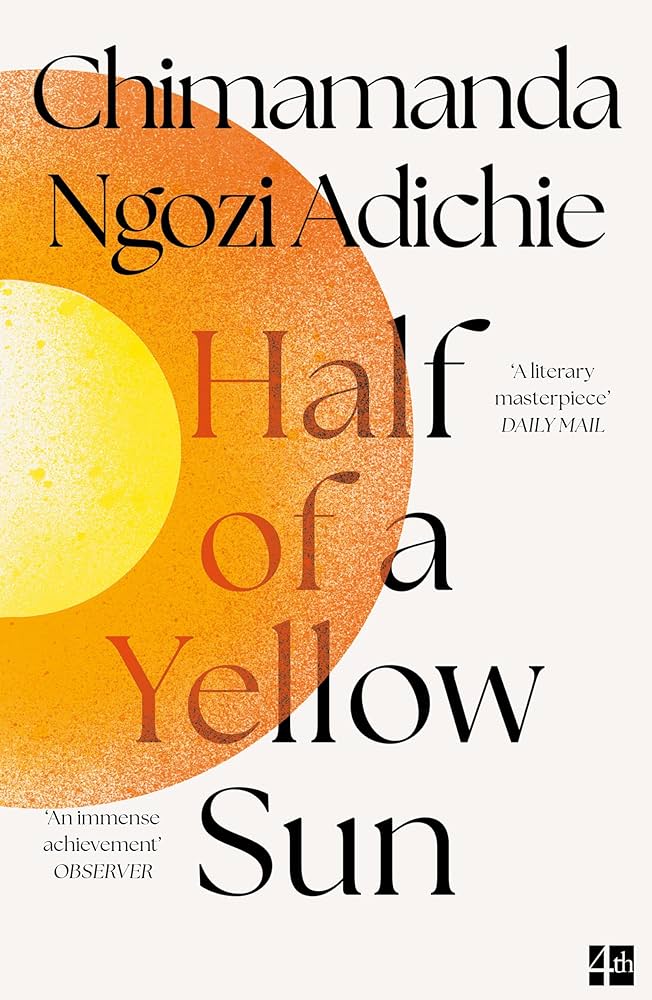
Chimamanda Ngozi Adichie is the author of Half of a Yellow Sun, a novel that spans 433 pages and contains 37 chapters divided into four parts: Early 60s, Late 60s, Early 60s, and Late 60s. It was published in Nigeria by Fourth Estate in 2006 and is currently priced in the range of 6,000 naira to 16,000 naira.
Reading this novel was like traveling back in time to a painful era. The novel concentrates on the before, during, and after of the Biafran War in the eastern part of Nigeria. It is centered on a family: Olanna, Odenigbo, and their houseboy Ugwu, and their close relatives. The book narrates how Easterners lived within and beyond the East for commercial and other purposes. I felt like I was part of every action that took place. Each atmosphere controlled my emotions. Though accompanied with some sexual scenes, the overall plot made me understand the way humans react to varying emotions in real life.
The authoress took her time to craft every sentence creatively and intentionally. Each of them is functional. I could vividly imagine every character, every action, every scene. This imagery especially made everything real. She is no ordinary storyteller. To think that she wrote a story she didn't experience firsthand, breathing so much life into it that any mindful reader would feel like they were part of everything, is absolutely magical. None of the characters was immortal and none was disappointing. They all played their roles exceptionally.
I also like how she sectioned the whole concept. Part 1 sets the tone of the whole story and the family arrangements. Part 2 explores the escalating tension in the region and most especially in the family. This part is the most tricky one. Knowing the weight of the conflict but not the reason was suspenseful. I read this part quickly than the other parts because I was so curious to know the reason for the hate. Part 3 was the flashback of everything that happened after Part 1 and before Part 2. It exposes the details of the hurt: the betrayals, motivations, and emotional depth. Part 4 discusses the war at its peak. Every scene reflects the chaos, fear, and faith; Ugwu's conscription, the starvation, air raids, Odenigbo's mother's death, and most painfully Kainene's disappearance while on a refugee operation. This was and still is very painful.
The character that annoyed me the most was Ugwu. After everything he had done, one would think he was a smart and responsible man. Olanna's reaction and trouble to his first conscription was enough to instill some sense into him, but he got conscripted again due to his desire and foolishness. I wish he had gone through more pain when he fell during one of the battles. What he went through wasn't enough to atone for what he and his fellow soldiers did to the bar girl.
I'll rate the book nine over ten because she realistically exposed everything there is to know about what happened during the Biafra War.
Overall, the story is history. One that must be transmitted without stop. All generations should know the story. The true story of the brave and strong Easterners who, with nothing, fought relentlessly for their freedom. With fear and faith, they lived through the most torturous period of their life. Their story lives on.