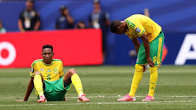
South Africa leave the World Cup with heads high, having reached the knockout stages for the first time. Hugo Broos built a disciplined, cohesive side that proved they can live with stronger nations for long stretches. Yet the same campaign also underlined exactly what separates Bafana Bafana from the game’s elite.
The most glaring gap is in the final third. South Africa controlled long spells of possession, including more than half the ball against Canada, but turned that dominance into only two goals in four matches, just one from open play. Lyle Foster, Iqraam Rayners and Evidence Makgopa all struggled to impose themselves, and the team rarely looked like it had a genuine match‑winner. The structure is there; the cutting edge is not.
Physicality is another fault line. Broos himself admitted that Canada, and others, simply had more power and speed. As games opened up, South Africa’s technical quality could no longer mask the athletic deficit. Opponents recovered quicker, won transitions and sustained intensity, while Bafana increasingly chased shadows. The solution is not just picking bigger bodies, but developing players who can pair South Africa’s natural technique with top‑level explosiveness and endurance.
Fatigue fed into psychology. Players spoke of “losing the legs” and retreating into their shells as Canada seized control. Late in matches, pressing dropped, the defensive line sank and decision‑making wavered. Conditioning therefore becomes a tactical issue: if Bafana want to play proactive football for 90 minutes, they must be fit enough, and mentally drilled enough, to sustain it.
Fine margins also hurt them. An early error and red card against Mexico, lapses in concentration at the start and end of games, and moments of poor game management proved costly. At this level, one mistake is often one goal. Sharpening focus, especially in the opening ten minutes and in stoppage time, is non‑negotiable if South Africa are to become harder to beat.
Finally, there is the ceiling of the domestic game. The PSL has produced a strong core, particularly from Mamelodi Sundowns, but Broos has been blunt: the World Cup operates at a level beyond what local football can consistently provide. For Bafana to evolve, more players must test themselves abroad, in leagues where intensity, tempo and competition for places are relentlessly higher.
The World Cup run should not be seen as a destination, but as a blueprint. Add a ruthless striker, greater athleticism, stronger mentality and broader overseas experience, and South Africa’s next leap forward becomes possible.




.jpeg?alt=media&token=96b327a5-8e62-4ed1-a078-308aff149ed1)