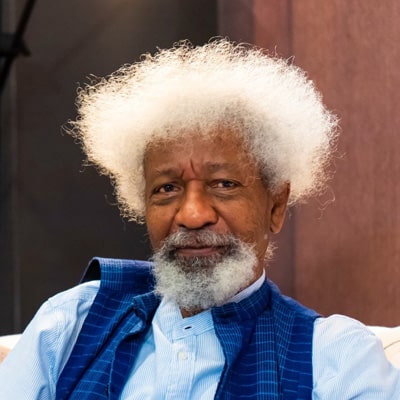
Nobel laureate Wole Soyinka has unleashed a scathing critique of US President Donald Trump’s reckless threats to send military forces into Nigeria, branding the comments as a glaring example of ignorance about the country’s complex security landscape.
Following a meeting with Benue State Governor Hyacinth Alia in Makurdi, Soyinka didn’t hold back. He firmly stated that no foreign leader should meddle in Nigeria’s security issues without grasping the intricate realities on the ground. “You don’t just open your mouth and say, ‘I’m coming to help you whether you like it or not… and I’m coming with violence from outside with poor, almost non-existent analysis of the complexities of where the problem is,’” he declared, highlighting the absurdity of Trump’s oversimplified approach.
Criticizing Trump’s impulsive call for military intervention, Soyinka warned that such statements, especially those promising rapid and aggressive action, could have dire repercussions. “And you say, ‘I’m coming to help you, I’m coming with guns a-blazing’. When we come in, ‘it’s going to be fast, vicious and swift’,” he emphasized, pointing out the dangerous implications of such rhetoric.
Soyinka also reminded the world that Nigeria’s security challenges stem from more than just religious conflict; they are fueled by extremist groups that exploit faith for political and economic gain. He stressed that a genuine understanding of the root causes is essential, rather than resorting to misguided military solutions.
Moreover, he insisted that while governments must prioritize the safety of their citizens, they must also show respect for victims of violence and for those striving for genuine solutions. “Is that the language of somebody whose head is correct? Any government has an obligation to ensure the welfare of its citizens. But, at least, have some respect for victims and those trying to find solutions to the unacceptable situation,” Soyinka asserted.
Trump’s controversial designation of Nigeria as a “Country of Particular Concern,” due to alleged violence against Christians, has sparked a firestorm of debate and concern. His threats of intervention have left many Nigerian leaders, including President Bola Tinubu, hurriedly dismissing the characterization as disconnected from the nation’s reality.
On the eve of these tensions, an open hearing by the United States House Foreign Affairs Subcommittee on Africa revealed a divided opinion among lawmakers, religious leaders, and officials regarding Trump’s provocative stance on Nigeria.
As the drama unfolds, the ramifications of potential foreign intervention in Nigeria’s security issues are under intense scrutiny. With Soyinka’s impassioned call for more informed and respectful international relations resonating, the global community is left questioning whether ignorance will continue to drive diplomatic decisions.