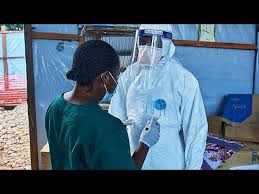
In Ituri province in eastern Democratic Republic of the Congo, Ebola treatment centres are expanding at breakneck speed as medical teams struggle to keep pace with a relentless outbreak. What began in a single unused paediatric ward in Bunia has evolved into a sprawling network of specialized units, isolation tents and triage zones designed to contain one of the world’s deadliest viruses.
When the first cases appeared, health workers moved quickly into a paediatric building at CME Hospital that had never been commissioned. According to Dr Patrice Kabongo, case management focal point at the World Health Organization’s DRC office, the team reconfigured the ward almost overnight, carving out high-risk and low-risk areas, installing decontamination points and setting up strict one-way routes for staff and patients.
The goal was simple but urgent: admit patients fast enough to break chains of transmission while maintaining safe conditions for staff. As case numbers climbed, that improvised solution became a blueprint. Similar layouts were replicated across Ituri and neighbouring provinces, with prefabricated structures and tented extensions added to existing health facilities.
Capacity has surged from roughly ten beds at the outset of the outbreak to about 700 beds spread across 22 centres. Even so, most facilities are running close to 90 per cent occupancy, forcing planners to prepare an additional 300 beds to avoid turning patients away. Each new bed requires more than a mattress: it demands trained staff, protective equipment, reliable water and power, and secure waste management to prevent the virus from spreading within the very places meant to stop it.
Inside the centres, the work is as much social as it is clinical. Early in the outbreak, families were barred from entering, fuelling rumours that patients were being mistreated or never returned alive. To counter this, teams introduced controlled family visits, transparent walls, and regular briefings so relatives can see how patients are treated and how the disease progresses.
That shift has been critical. With more than 1,500 confirmed cases, over 500 deaths and hundreds of survivors, trust now underpins every intervention. More than 10,000 contacts are under active follow-up, and surveillance teams fan out daily through villages and displacement camps, relying on community cooperation to report symptoms quickly.
For doctors, nurses and local volunteers, the race is constant: expand faster than the virus, earn enough trust to bring patients in early, and keep every new bed from becoming a missed opportunity to stop Ebola in its tracks.