The World Health Organization has declared the Ebola outbreak in the Democratic Republic of Congo an international health emergency, after more than 90 suspected deaths and hundreds of possible infections linked to the highly contagious virus.
The epicentre lies in Ituri province in the country’s northeast, a gold-rich region bordering Uganda and South Sudan where constant movement of miners, traders and displaced families is complicating efforts to trace and isolate cases. Congolese authorities say around 350 suspected infections have been identified so far, most of them adults aged 20 to 39. Women account for more than 60 percent of reported cases, reflecting their central role in caregiving, trade and community life.
Health officials warn the outbreak could spread rapidly across central and East Africa. A confirmed case in Goma, a major commercial hub on the Rwandan border and currently under the control of the M23 armed group, has heightened fears of wider transmission. Uganda has reported one confirmed case and one death in Congolese nationals who crossed the border from DR Congo. The Africa Centres for Disease Control and Prevention has assessed the risk of regional spread as high.
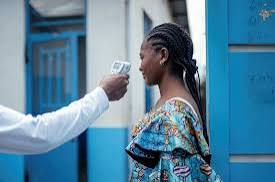
At Kyeshero Hospital in Goma, staff are racing to reinforce fragile defences. Visitors must now pass through handwashing stations before entering pre-triage zones, where temperatures and other vital signs are checked. Anyone with fever or other suspicious symptoms is immediately separated from the crowd and moved to isolation for further examination.
Yet hospitals remain under strain. Medical director Fabrice Bichenge says facilities were not fully prepared for an outbreak of this scale and are already short of basic infection prevention and control supplies, from gloves and gowns to disinfectant. Appeals have gone out to international partners and aid agencies for urgent support.
The current crisis is driven by the Bundibugyo strain of Ebola, a variant first identified in Uganda and later in DR Congo. Unlike the Zaire strain responsible for previous major outbreaks, there is no licensed vaccine or specific antiviral treatment for Bundibugyo. Past epidemics with this strain have recorded mortality rates of 30 to 50 percent.
Health workers say their most effective tools remain rapid case detection, isolation, safe burials and rigorous hygiene. But mistrust and misinformation are slowing the response. In some affected communities, families initially attributed the illness to witchcraft or a mystical curse, turning first to prayer centres instead of clinics. By the time patients reach formal health facilities, they may already have infected relatives, neighbours and fellow travellers.
Experts warn that without sustained security, community engagement and cross-border coordination, the outbreak could accelerate, exploiting dense urban neighbourhoods, armed conflict and porous frontiers to spread far beyond its current hotspots.


.jpeg?alt=media&token=96b327a5-8e62-4ed1-a078-308aff149ed1)