When I first moved to Abuja as a young adult, I thought adulthood was supposed to look expensive.
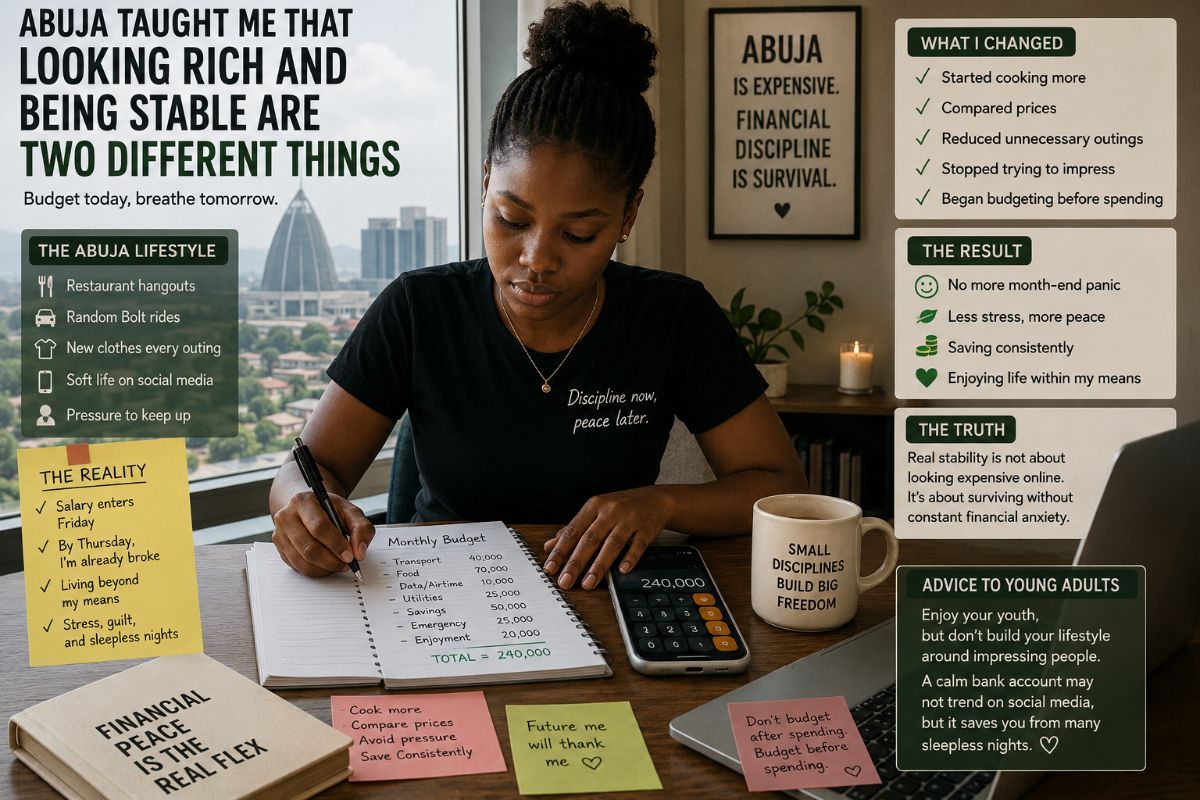
Clean apartments with POP ceilings. Sunday brunches in Wuse. Random Bolt rides because “trekking is stressful.” New clothes for every outing. Soft life pictures with captions about “God when?”
Nobody prepared me for the silent pressure of Abuja lifestyle.
In Abuja, people can casually spend ₦25,000 in one evening and still say, “We didn’t even do much.”
You enter a restaurant thinking you’ll buy small rice and chicken, then you quietly start calculating your account balance after seeing the menu.
At first, I tried to keep up.
That was my first mistake.
I was earning just enough to survive, but I was living like someone with oil money hidden somewhere in Maitama. Every weekend became “small enjoyment.” Every salary alert felt like a temporary visitor instead of actual income.
The dangerous thing about Abuja is that suffering can look very comfortable from outside.
You’ll see someone wearing perfume worth your monthly data subscription, taking pictures in aesthetic cafés, posting “living my best life,” meanwhile they’re also praying their transfer will not fail because their account balance is fighting for survival.
I learned budgeting the hard way one particular month.
Salary entered on Friday.
By the next Thursday, I was already broke.
Transport. Data subscription. Foodstuff. “Urgent” contribution for a friend’s birthday. Shawarma because I was sad. Random online shopping because Abuja stress was “getting too much.”
Then NEPA decided to remind us that adulthood is a spiritual battle.
I remember sitting inside my room that night with one loaf of bread, half sachet of milk, and serious regret.
That was the first time I opened my banking app and became honest with myself.
The problem was not only low income.
The problem was undisciplined spending disguised as enjoyment.
So I changed things slowly.
I started cooking more instead of buying food every day.
I learned that supermarket prices in Abuja can humble anybody, so I began comparing markets before buying things.
I reduced unnecessary outings.
I stopped trying to impress people who were probably also struggling privately.
Most importantly, I started budgeting before spending.
Not after.
I created categories for transport, food, savings, airtime, and emergencies. Once the money for enjoyment finished, that was the end. No emotional spending. No “I deserve soft life” purchases when my account was crying.
At first, it felt boring.
But after some months, something changed.
For the first time since moving to Abuja, I stopped panicking before month-end.
That peace felt richer than expensive brunches.
The truth is, many young adults in Abuja are silently battling financial pressure. Everybody wants to appear successful quickly because the city itself feels fast, polished, and competitive.
But real stability is not about looking expensive online.
It’s about surviving without constant financial anxiety.
Budgeting may not look glamorous, but it gives you something Abuja can easily steal from you if you’re not careful:
Peace of mind.
My candid advice. Enjoy your youth, but don’t build your lifestyle around impressing people. A calm bank account may not trend on social media, but it saves you from many sleepless nights.