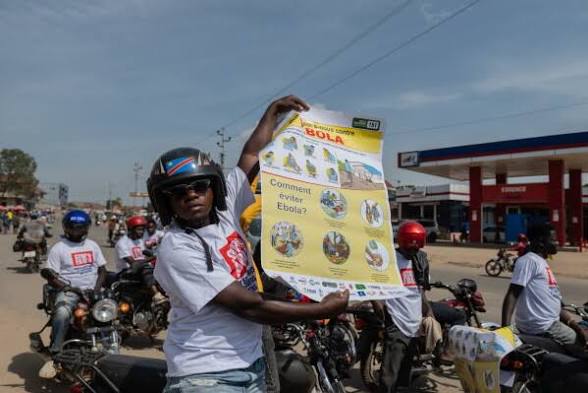
Engines revved and megaphones crackled as dozens of young motorcycle taxi drivers fanned out across the streets of Bunia and nearby Rwampara, turning their daily routes into a moving classroom on Ebola prevention.
Wearing white Stop Ebola T-shirts and helmets marked with red warning stickers, the riders wove through crowded markets and dusty junctions, broadcasting messages on handwashing, early treatment and safe burials. Health workers walking alongside handed out leaflets and answered questions from residents who flagged down the convoy.
The campaign, organised with support from the World Health Organization, is part of an urgent push to contain an Ebola outbreak that has killed more than 115 people and infected nearly 600 in eastern Democratic Republic of the Congo. Authorities say the virus is spreading in communities where mistrust of government and foreign agencies runs deep.
There has been a lot of scepticism and people still deny the existence of the disease, said Jacques Maliro, WHO’s Risk Communication and Community Engagement Officer. The aim is really to raise awareness and mobilise the public.
Rumours that Ebola is a political invention or a curse have discouraged some residents from seeking care. At the start of the outbreak, local religious leaders in parts of Ituri province told worshippers that faith alone would protect them, reinforcing resistance to treatment centres and vaccination teams.
For many of the riders, the message is personal. Motorcyclist Mastaki Mumbere said the growing number of funerals has shaken his neighbourhood. We have seen several people die from this disease. Many people are dying, and that really scares us, he said.
Another participant, Josue Mbabona, said he had already lost three relatives, including his pastor and a cousin. This disease is real. Those who do not believe it should know that it is real, he said, as he adjusted a loudspeaker strapped to the back of his bike.
The response is unfolding amid armed conflict and deep insecurity. Health centres have been attacked by residents demanding the bodies of loved ones, despite strict burial rules designed to prevent infection. More than 520 incidents affecting healthcare operations have been recorded, according to WHO officials, while fighting between rebel groups has cut off some villages from surveillance and treatment teams.
Compounding the crisis, many communities lack reliable access to clean water, making frequent handwashing difficult. The outbreak has been linked to the Bundibugyo strain of Ebola, a rare variant for which no approved vaccine or treatment currently exists, though several candidates are under development.
Student David Kasimwa said the fear of infection has reshaped daily life. This disease has disrupted many activities. We are no longer able to travel freely because we are afraid, he said.
Health officials hope that trusted local figures such as motorcycle taxi drivers can bridge the gap between science and suspicion. As the convoy rolled out of Bunia’s central roundabout, riders slowed to speak directly with pedestrians, repeating a simple refrain over their loudspeakers: Ebola is real, but it can be stopped.


