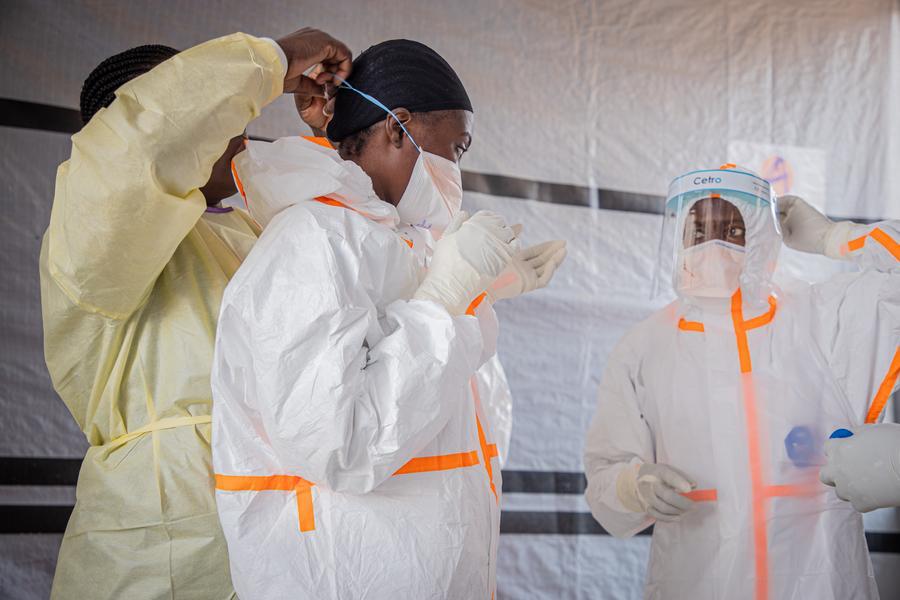
The Ebola outbreak in the Democratic Republic of the Congo remains in a very active phase, with health authorities warning that infections have not yet reached their peak as the virus spreads into new areas.
Latest epidemiological data from the Ministry of Health show 1,792 confirmed cases of Bundibugyo Ebola virus disease. At least 625 people have died, while 295 patients have recovered. Another 764 patients are in isolation or receiving hospital care in treatment centers across the affected provinces.
Bunia, the capital of the eastern Ituri Province, has emerged as the epicenter of the crisis. Health Minister Samuel Roger Kamba said the steady rise in reported cases reflects both the spread of the virus and an expansion of community-based surveillance, which is uncovering infections that previously went undetected.
He cautioned that it is still too early to predict when the outbreak will plateau. High population mobility, porous borders, and persistent mistrust of health workers in some communities are hampering efforts to trace contacts and safely isolate suspected cases.
Response teams are also grappling with insecurity in parts of eastern DR Congo, where armed groups operate and displacement is common. These conditions complicate the work of surveillance teams, vaccinators, and burial squads, allowing the virus to move with people seeking safety or livelihoods.
Wessam Mankoula, operations manager for the Ebola response at the Africa Centers for Disease Control and Prevention, said the country recorded 353 confirmed cases in a single week, a 25 percent jump in the caseload. He described the situation as the fastest-growing Ebola outbreak ever recorded on the African continent, warning that the virus remains ahead of the response.
The Bundibugyo strain driving this outbreak poses a particular challenge because there is no licensed vaccine or proven specific treatment. Existing Ebola vaccines target other strains and offer limited or no protection against Bundibugyo.
In an effort to change the trajectory, the World Health Organization and Congolese authorities have launched a clinical trial of two experimental therapeutics: the monoclonal antibody MBP134 and the antiviral drug remdesivir. The trial will test each drug alone and in combination to determine whether they can improve survival among patients diagnosed with Bundibugyo virus disease.
Health officials say that, alongside experimental treatments, the backbone of the response remains rapid case detection, isolation, safe burials, and sustained engagement with communities that remain wary after repeated outbreaks.