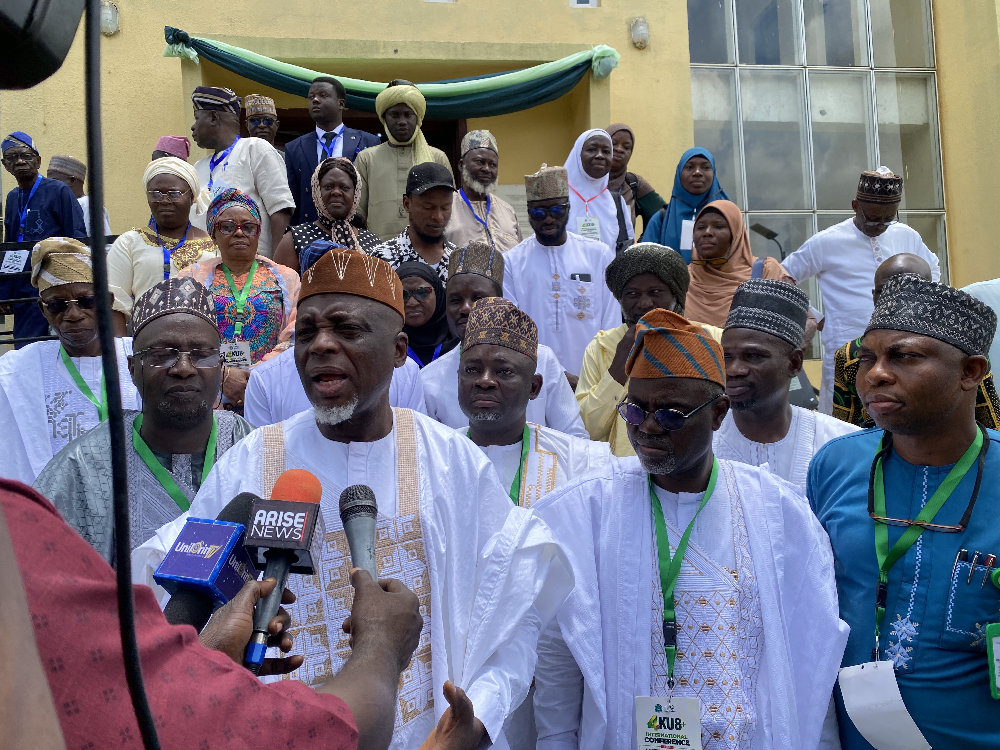
A new push to reposition Nigerian universities around artificial intelligence, collaborative research and talent retention took centre stage on Friday as the KU8+ Consortium opened its 2026 international conference at Summit University, Offa, Kwara State.
Vice-chancellors, academics, policymakers, researchers, industry leaders and other stakeholders at the gathering called for universities to move beyond traditional knowledge production and become more effective engines of innovation and solutions to Nigeria’s development challenges.
The Vice-Chancellor of Summit University, Prof. Abiodun Musa Aibinu, welcomed delegates and reaffirmed the institution’s commitment to research, innovation, academic excellence and strategic partnerships capable of addressing national and global challenges.
The Chairman of the KU8+ Consortium and Vice-Chancellor of the University of Ilorin, Prof. Wahab Olasupo Egbewole, SAN, described the consortium as a platform for collective action and knowledge sharing, urging member universities to deepen cooperation in teaching, research, innovation and community engagement.
The Chairman of the occasion and Commandant, Navy College of Health Sciences, Offa, Commodore Ogbeche Richard Ochagu, commended the initiative and urged universities to sustain partnerships that could translate research and innovation into practical solutions to national problems.
Former Executive Secretary of the National Universities Commission, Emeritus Professor Peter A. Okebukola, OFR, challenged African universities to move from consuming artificial intelligence technologies to creating solutions designed for the continent’s needs.
Okebukola urged KU8+ to establish an AI hub bringing scholars and experts from different disciplines together to develop technologies for various sectors.
He also proposed a permanent KU8+ secretariat, shared digital infrastructure, expanded staff and student exchange programmes and 20 joint projects spanning teaching, research, innovation, entrepreneurship and community service.
The first lead paper presenter, Prof. Yusuf Olaolu Ali, SAN, represented by the Dean, Faculty of Law, University of Ilorin, Prof. Bashiru Adeniyi Omipidan, urged universities to demonstrate their relevance through measurable societal impact rather than knowledge generation alone.
Ali identified digital infrastructure, cybersecurity, research capacity and financial sustainability as critical areas requiring urgent attention, while calling for responsible AI adoption and research aligned with societal challenges.
The second lead paper presenter, Emeritus Professor Olugemiro Jegede, focused on Nigeria’s growing loss of intellectual capital, calling for deliberate measures to retain the country’s brightest graduates and curb the impact of the japa syndrome.
Jegede argued that Nigeria must create conditions that encourage its best graduates to remain, train the next generation and contribute to national development.
He identified funding disparities, brain drain and industrial friction as major challenges and proposed credit transfer systems, staff and student exchanges, a shared postgraduate school, faculty exchange in health sciences, an agricultural innovation centre and comprehensive AI literacy programmes.
He warned that the decline of Nigerian universities had become a national emergency and expressed the hope that KU8+ would provide a model for rejuvenating higher education across Nigeria and West Africa.
The Chairman of the Board of Trustees of KU8+, Emeritus Professor Ishaq Oloyede, urged universities to devote greater attention to agriculture, particularly in Kwara State, and use scholarship to provide intellectual solutions to societal problems.
The Olofa of Offa, Ọba Muftau Muhammed Gbadamosi, Ajagungbade I, Esuwoye II, commended the consortium and noted that Kwara’s 13 universities placed the state in a strong position to emerge as a major higher education hub.
The Ẹkẹfa of Iyalode Ibadan, Chief Mojisola Ladipo, also commended the initiative and expressed hope that KU8+ would inspire similar collaborations across the country.