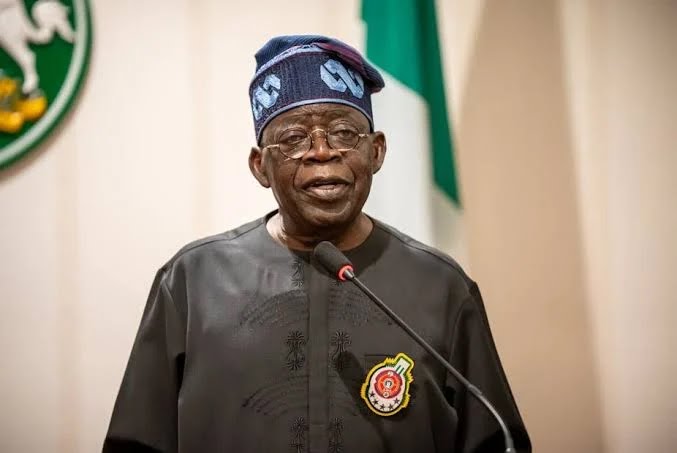
President Bola Tinubu has insisted that Nigeria’s economy is on a path of “serious foundational progress” despite the hardship triggered by his administration’s sweeping reforms.
Speaking at a meeting in the State House, Abuja, Tinubu acknowledged that the policy changes introduced since he assumed office have been painful for many Nigerians, but argued they are necessary to reset the economy and unlock long-term growth.
He was quoted by his media aide, Bayo Onanuga, as saying that reforms are rarely smooth or popular, likening the process to “taking the bitter medicine” required to restore economic health. According to the president, the government is focused on implementing the measures in a way that ultimately delivers “a harvester of good things” for citizens.
Tinubu’s economic agenda has centred on ending the long-standing fuel subsidy regime, unifying the exchange rate, and overhauling revenue collection. These steps have led to sharp increases in fuel and transport costs, a spike in inflation, and pressure on household incomes, drawing criticism from labour unions and opposition figures.
However, the president maintains that the reforms are already laying the groundwork for a more resilient and productive economy. He argued that changes in revenue management and fiscal discipline are designed to stimulate growth, attract investment, and reduce the country’s dependence on borrowing.
Analysts note that while the reforms have been welcomed by international financial institutions and some investors, their success will depend on how quickly the government can cushion the impact on vulnerable groups and translate macroeconomic gains into jobs and improved living standards.
Tinubu has repeatedly appealed for patience, saying that short-term discomfort is the price of reversing years of policy distortions and underinvestment. He has also pledged to back the reforms with targeted social interventions, infrastructure spending, and support for key sectors such as agriculture, manufacturing, and small businesses.
Reiterating his stance at the State House meeting, the president framed the current moment as a difficult but necessary transition. “Yes, some issues are difficult, taking the bitter medicine, but it is working well,” he said, insisting that the trajectory of the economy justifies staying the course.