Global markets turned risk-averse as investors reacted to Donald Trump’s latest warning that the United States could launch military strikes on Iran if nuclear talks fail to produce what he called a “meaningful deal.”
The remarks, delivered at the inaugural meeting of his “Board of Peace” initiative on Gaza, reignited geopolitical fears and halted a fragile rebound in equities that had followed a sharp, AI-driven sell-off earlier in the month.
Trump said negotiations with Tehran had long proved difficult and insisted that without a substantial agreement, “bad things happen,” underscoring the message by deploying additional warships, fighter jets and other military assets to the region. He hinted that Washington “may have to take it a step further” if diplomacy stalls, suggesting the world would “be finding out over the next probably 10 days.”
The rhetoric came on the heels of a second round of Omani-mediated talks between US and Iranian officials in Geneva, part of Washington’s effort to prevent Iran from obtaining a nuclear weapon, a goal Tehran maintains it is not pursuing. Israeli Prime Minister Benjamin Netanyahu added to the tension, warning that any attack by Iran would draw a response “they cannot even imagine.”
The prospect of conflict in the oil-rich Middle East sent crude prices higher, with benchmark contracts extending a week-long rally to their strongest levels in months. West Texas Intermediate and Brent both advanced, reflecting traders’ concern over potential supply disruptions.
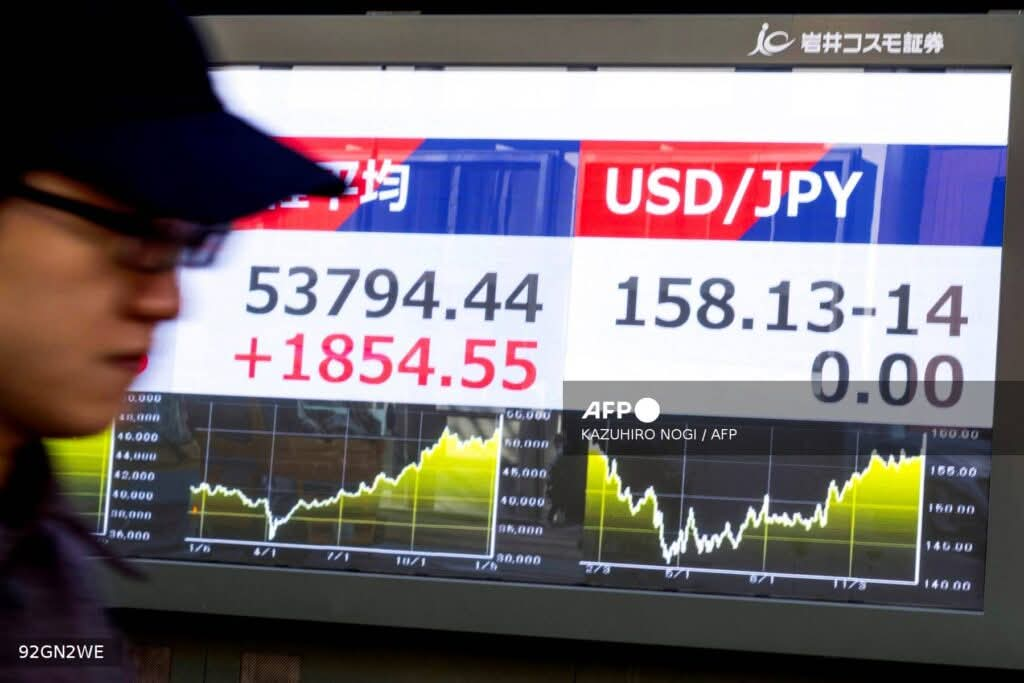
Equity markets across Asia largely moved lower. Hong Kong’s Hang Seng Index slipped as trading resumed after a three-day break, while Tokyo’s Nikkei 225, Sydney, Wellington and Bangkok also fell. Shanghai remained closed for a holiday. Bucking the trend, Seoul pushed to another record high on sustained demand for technology shares, and markets in Singapore, Manila and Mumbai also posted gains.
City Index analyst Matt Simpson cautioned that the build-up of US military power did not necessarily signal an imminent war. He described Washington’s posture as “pressure and leverage rather than a prelude to invasion,” arguing that the combination of military readiness and ongoing talks suggested both sides were still searching for a diplomatic “off-ramp.”
In Southeast Asia, Jakarta stocks edged lower despite a new trade accord between Trump and Indonesian President Prabowo Subianto. The deal imposes a 19 percent tariff on Indonesian exports to the US, averting a steeper 32 percent levy, while Jakarta agreed to purchase $33 billion in US energy, agricultural and aviation products, including Boeing aircraft.