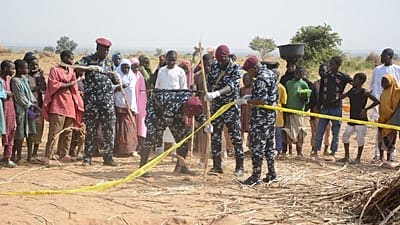
In Kurmin Wali, a farming community in Nigeria’s Kaduna state, families move between churches and local chiefs’ compounds clutching photographs and prayer books, waiting for word of more than 150 worshippers seized during Sunday services.
Armed men stormed three churches in the village, firing into the air and ordering congregants to the ground before marching them into the surrounding forests. Residents say the kidnappers later demanded an unusual ransom: 17 motorcycles, a price far beyond the reach of most families in a region already battered by poverty and repeated attacks.
The mass abduction is part of a grim pattern in northwestern Nigeria, where criminal gangs known locally as bandits raid villages, schools, and religious centers, abducting scores at a time. Survivors describe attackers arriving on motorbikes, sometimes in military-style fatigues, overwhelming lightly defended communities in minutes.
Even as Kurmin Wali counts its missing, officials in Abuja are touting what they call a breakthrough with Washington. After years of delays, the United States has agreed to release defense equipment Nigeria paid for but had not received, according to senior government figures and U.S. diplomats.
The package, built up over roughly five years, includes armed and surveillance drones, helicopters, tactical vehicles, and critical spare parts. Nigerian security officials say the hardware will bolster intelligence gathering, night operations, and rapid response in remote areas where bandits and jihadist factions operate with impunity.
The thaw follows a period of tension, when U.S. concerns over human rights and religious freedom slowed or blocked some arms transfers. Abuja has pushed back, arguing that restrictions only embolden insurgents and criminal networks. Recent high-level meetings between Nigeria’s national security team and U.S. officials have focused on rebuilding trust and tightening joint counterterrorism efforts.
Analysts warn, however, that new equipment will not by itself reverse Nigeria’s security collapse. The country faces overlapping threats: Boko Haram and Islamic State West Africa Province in the northeast, bandit militias in the northwest and central belt, and separatist and criminal violence elsewhere.
For the families in Kurmin Wali, those strategic debates feel distant. Their immediate demand is simple: proof of life, a path to negotiation, and the safe return of loved ones taken from the pews of their churches.