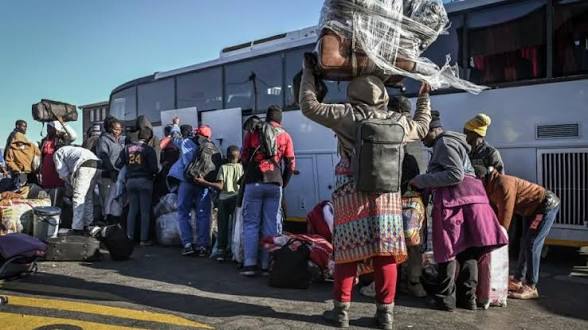
Zimbabwean authorities say nearly 100,000 of their citizens have returned from South Africa in recent weeks, amid rising anti-immigrant sentiment and mounting pressure on undocumented foreign nationals to leave.
Officials in Harare describe the movement as one of the largest spontaneous returns in years, driven by fear of harassment, tightening immigration enforcement and campaigns by anti-migrant groups demanding that foreigners “self-deport”.
The majority of those coming back are women and children, according to the government, which says more than 70 percent of returnees fall into these categories. Many arrive at the Beitbridge border crossing with few belongings, after years spent working or seeking opportunities in South Africa’s cities and farming regions.
At Beitbridge, Zimbabwe’s busiest land border post, health ministry staff, supported by Doctors Without Borders and other humanitarian partners, are providing medical screening, basic treatment and psychosocial support. Authorities say all returnees are being profiled and screened, both for health concerns and protection needs.
The government has activated an expanded repatriation and reintegration programme as the numbers swell. Multiple ministries are involved, alongside civil society organisations and United Nations agencies, in an effort to prevent the crisis from deepening into a broader humanitarian emergency.
Support includes onward transport to home districts, temporary shelter, food assistance, medical care and help enrolling children in local schools. Social workers are assessing vulnerable cases, including unaccompanied minors, pregnant women and people with chronic illnesses.
Zimbabwean officials estimate that about two million of their citizens live in South Africa, many of them without formal documentation or on expired permits. Authorities in Harare say they are preparing for the possibility that more than half could eventually return if the climate in South Africa continues to harden.
The sudden influx is straining already limited public services in border towns and rural communities, where unemployment and poverty remain high. Local leaders warn that without sustained support, the returnees may struggle to rebuild their lives, risking renewed cycles of migration.
Zimbabwe is also assisting Malawian and Zambian nationals who are using its territory as a corridor on their own journeys home, offering basic services at transit centres before they continue north.