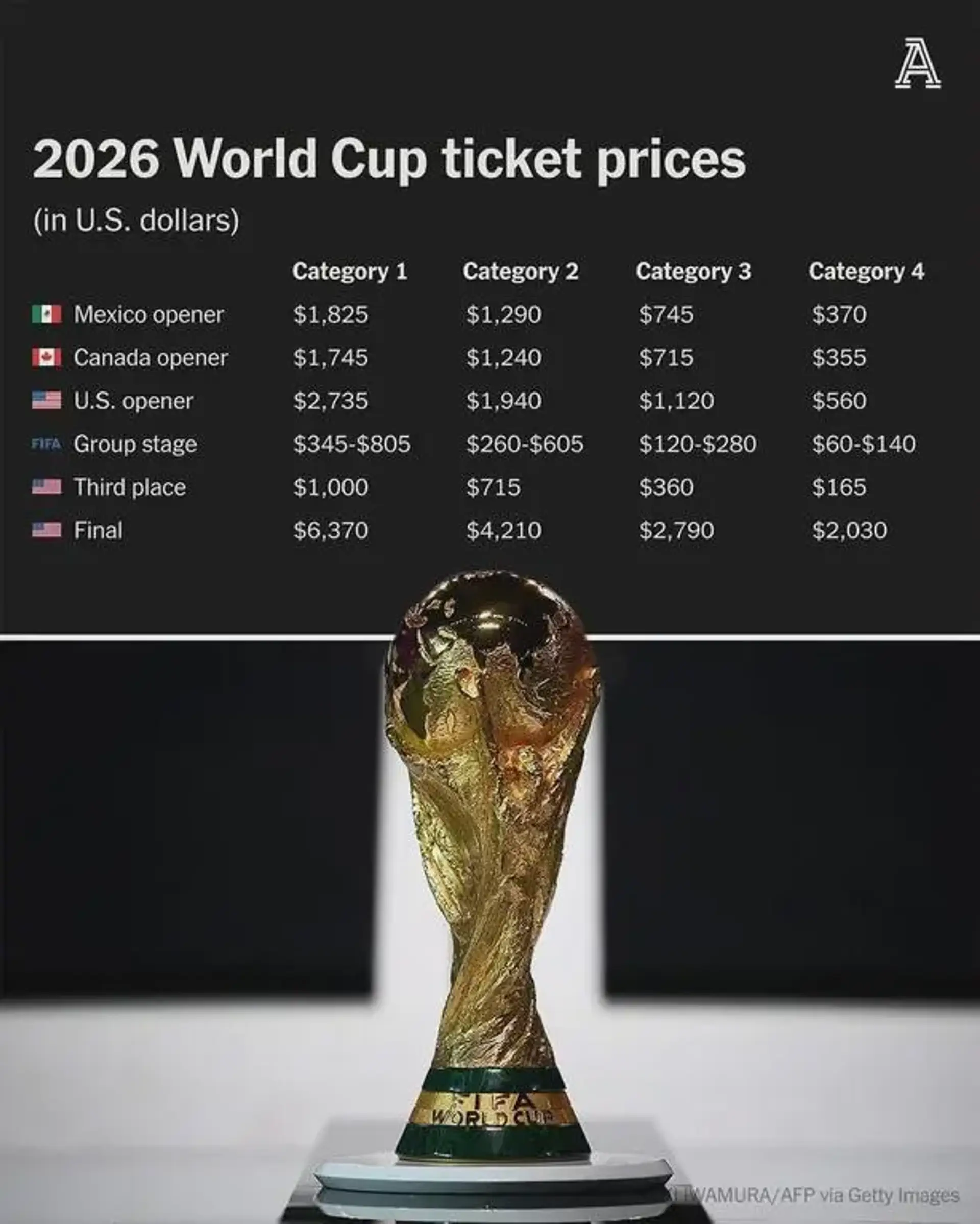
FIFA has increased the price of its most expensive publicly available ticket for the World Cup final by a factor of three, prompting widespread scrutiny of the organization’s pricing model and its implications for affordability and transparency.
The newly introduced “front category 1” seats for the July 19 final at MetLife Stadium in East Rutherford, New Jersey, are listed at $32,970 per ticket. Previously, the highest listed price was $10,990. That earlier price point now appears only in a limited wheelchair and easy-access category, effectively shifting most high-end demand into the substantially more expensive tier.
This price escalation coincides with intensified examination of FIFA’s use of dynamic pricing, a mechanism that adjusts ticket prices in real time based on demand levels. Critics contend that FIFA is leveraging heightened global interest in the first 48-team World Cup and the tournament’s return to the United States to test the maximum price tolerance of consumers.
Several members of the U.S. Congress from New Jersey have formally questioned FIFA’s pricing practices. They describe the approach as lacking transparency and argue that changing rules and sudden price increases create a perception of misleading treatment among fans. These legislators have requested detailed information on the methodology used to set prices and on any mechanisms designed to preserve access for non-corporate and non-elite buyers.
FIFA president Gianni Infantino has defended the pricing strategy as a market-based response consistent with the broader U.S. sports and entertainment landscape, where high-profile events often command premium prices. He maintains that lower official prices would primarily benefit scalpers and secondary-market operators, who could resell tickets at significantly higher levels. As supporting evidence, he cites listings on FIFA’s own resale platform that have reached prices in the millions of dollars.
However, the comparison with other U.S. sports properties is contested. While tickets for events such as the Super Bowl and major college football championships can approach or match some World Cup price levels, a substantial portion of NBA, NFL and college sports inventory remains available below $300. This undercuts the assertion that relatively low entry-level prices are structurally unattainable in the U.S. market.
Ticket pricing concerns are further amplified by additional cost factors, particularly transportation. Fans traveling to MetLife Stadium face potential increases in overall trip expenses. Local transit authorities initially proposed significant fare hikes for World Cup match days, then partially reversed those plans following political intervention, indicating sensitivity to public and political pressure around total event costs.
MetLife Stadium is scheduled to host eight World Cup matches, including group-stage fixtures involving Brazil, France, Germany and England, and will stage the final. Given the current pricing structure, the final is positioned to become one of the highest-priced live sports events on record, raising ongoing questions about the balance between revenue maximization, market-based pricing and broad fan accessibility.