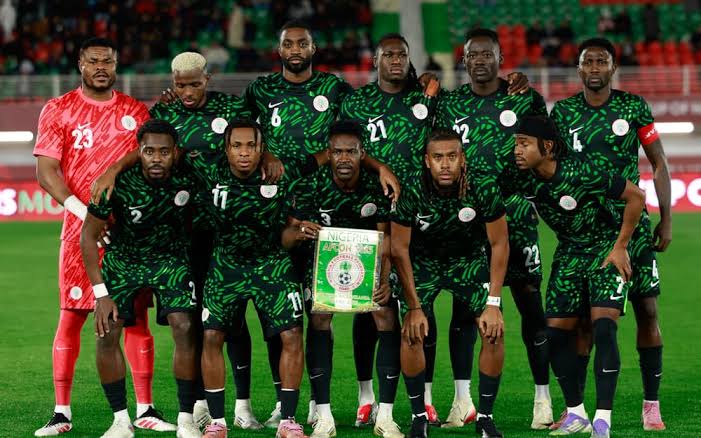
Nigeria’s national football team, the Super Eagles, achieved a 3–2 win against Tunisia in the 2021 Africa Cup of Nations (AFCON) group stage, securing advancement to the round of 16. The match, held in Morocco, featured early goals from Victor Osimhen, Wilfried Ndidi, and Ademola Lookman, establishing a significant lead for Nigeria. However, Tunisia scored twice in the final stages, highlighting ongoing defensive issues within the Nigerian team.
Despite the positive result, post-match analysis focused primarily on Nigeria’s defensive performance. The team conceded two late goals, raising concerns about concentration lapses and decision-making under pressure. These issues have been identified as potential risks as the tournament progresses.
Data from Opta Nigeria indicates that the Super Eagles have not kept a clean sheet in their last five matches, including four consecutive AFCON fixtures. This trend suggests a persistent lack of defensive stability and organization, which could be detrimental in future knockout-stage matches against stronger opponents.
Fan commentary on social media has been predominantly critical of the team’s defensive capabilities. Observers have described the defense as the primary weakness of the current squad, expressing concerns that these deficiencies could undermine Nigeria’s overall performance in the tournament.
Specific criticisms have been directed at the defenders’ reaction times and decision-making abilities. Some fans have noted a lack of composure and speed in responding to opposition attacks, further emphasizing the need for improvement in this area.
Goalkeeper Stanley Nwabali’s performance has also been scrutinized. While the team’s offensive output received positive feedback, Nwabali’s handling of crosses and command of the penalty area were identified as areas of concern. Some supporters have suggested that a change in goalkeeper may be necessary to enhance defensive reliability.
Key incidents, such as a mistake by Nwabali that contributed to Tunisia’s momentum shift, were highlighted as critical moments that nearly affected the match outcome. The penalty awarded to Tunisia was also debated, with some fans questioning the decision but maintaining that defensive improvements are required regardless of officiating.
Additional commentary has focused on the overall balance of the team, with particular emphasis on the importance of a dependable goalkeeper in tournament success. The consensus among analysts and supporters is that while Nigeria’s attack is effective, defensive shortcomings remain a significant concern.
As Nigeria prepares to face Uganda in the round of 16, the primary area of focus is the team’s defensive structure. The ability to address and rectify these issues will likely determine the Super Eagles’ prospects in the remainder of the competition.