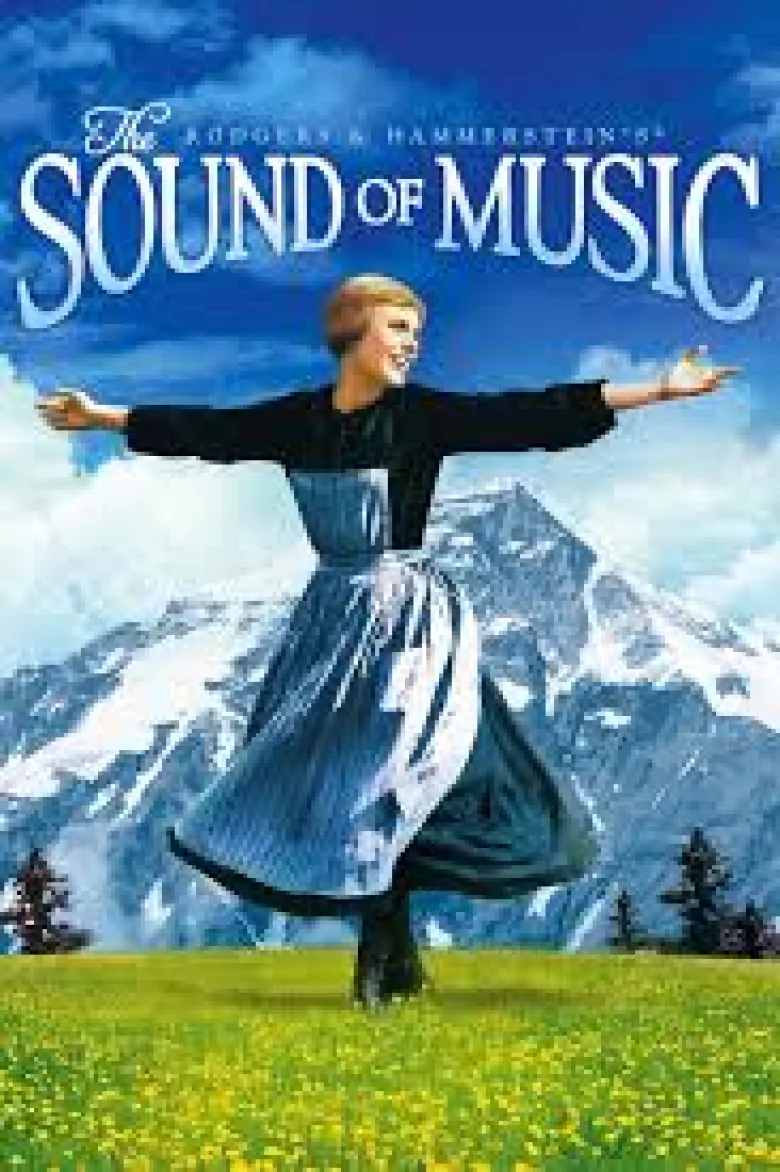
In the picturesque town of Salzburg, Austria, nestled in the rolling hills of the Alpine countryside, a young nun named Maria Rainer found herself at a crossroads. It was the year 1938, and the world was on the brink of chaos.
Maria, a free-spirited and music-loving novice, had been struggling to find her place within the strict walls of the Benedictine Abbey. Her love of singing and her natural talent for teaching had often led her to sneak away from her duties to sing with the local children.
One day, the Mother Abbess, wise and compassionate, summoned Maria to her chambers. "Maria, my child," she said, "I have been watching you, and I believe you have a special gift. But this gift is not being utilized within our walls. I fear you may be called to serve elsewhere."
Maria was both startled and intrigued. She had never considered leaving the abbey, but the Mother Abbess's words struck a chord deep within her.
The very next day, a telegram arrived at the abbey, requesting a young nun to serve as governess to the seven children of Captain Georg von Trapp, a wealthy and widowed naval officer. The Mother Abbess, sensing Providence at work, presented Maria with the opportunity.
Maria, though apprehensive, felt an inexplicable pull toward the von Trapp family. She accepted the position and set off for the von Trapp estate, nestled in the picturesque Salzkammergut region.
Upon her arrival, Maria was greeted by the stern and formal Captain von Trapp. The children, ranging in age from 5 to 16, were equally formal and distant. Maria's warm and gentle nature, however, soon began to win them over.
As Maria settled into her new role, she discovered that the children, though well-behaved, were desperately in need of love, attention, and music. The Captain, still grieving the loss of his wife, had become increasingly strict and distant.
Maria, with her boundless energy and passion for music, set out to bring joy and laughter back into the von Trapp household. She taught the children to sing, to dance, and to love music once more.
As the days turned into weeks, the von Trapp family began to transform before Maria's eyes. The children blossomed, their voices blending in perfect harmony. The Captain, too, began to thaw, his heart slowly opening to the possibility of love again.
But as the Nazi shadow loomed larger over Austria, the von Trapp family's happiness was short-lived. The Captain, fiercely opposed to the Nazi regime, was ordered to accept a commission in the German Navy.
Faced with the prospect of leaving Austria or betraying his conscience, the Captain made the bold decision to flee with his family. Maria, now deeply in love with the Captain and the children, joined them on their perilous journey.
Under the cover of night, the von Trapp family, led by Maria and the Captain, escaped over the Alps into Switzerland, singing and praying as they went.
Their story, a testament to the power of love, music, and courage, would become legendary. The Sound of Music, born in the hearts of Maria and the von Trapp family, would echo across the world, inspiring generations to come.
This story is based on the real-life events of Maria von Trapp, a young Austrian nun who became the governess of the seven von Trapp children and eventually the wife of Captain Georg von Trapp. The story was immortalized in the beloved Rodgers and Hammerstein musical, The Sound of Music.