Maria worked as a janitor at Jefferson High School, mopping floors long after students went home. Every evening, she'd pause by the library windows, watching the empty shelves gather dust—the library had been closed for two years due to budget cuts.
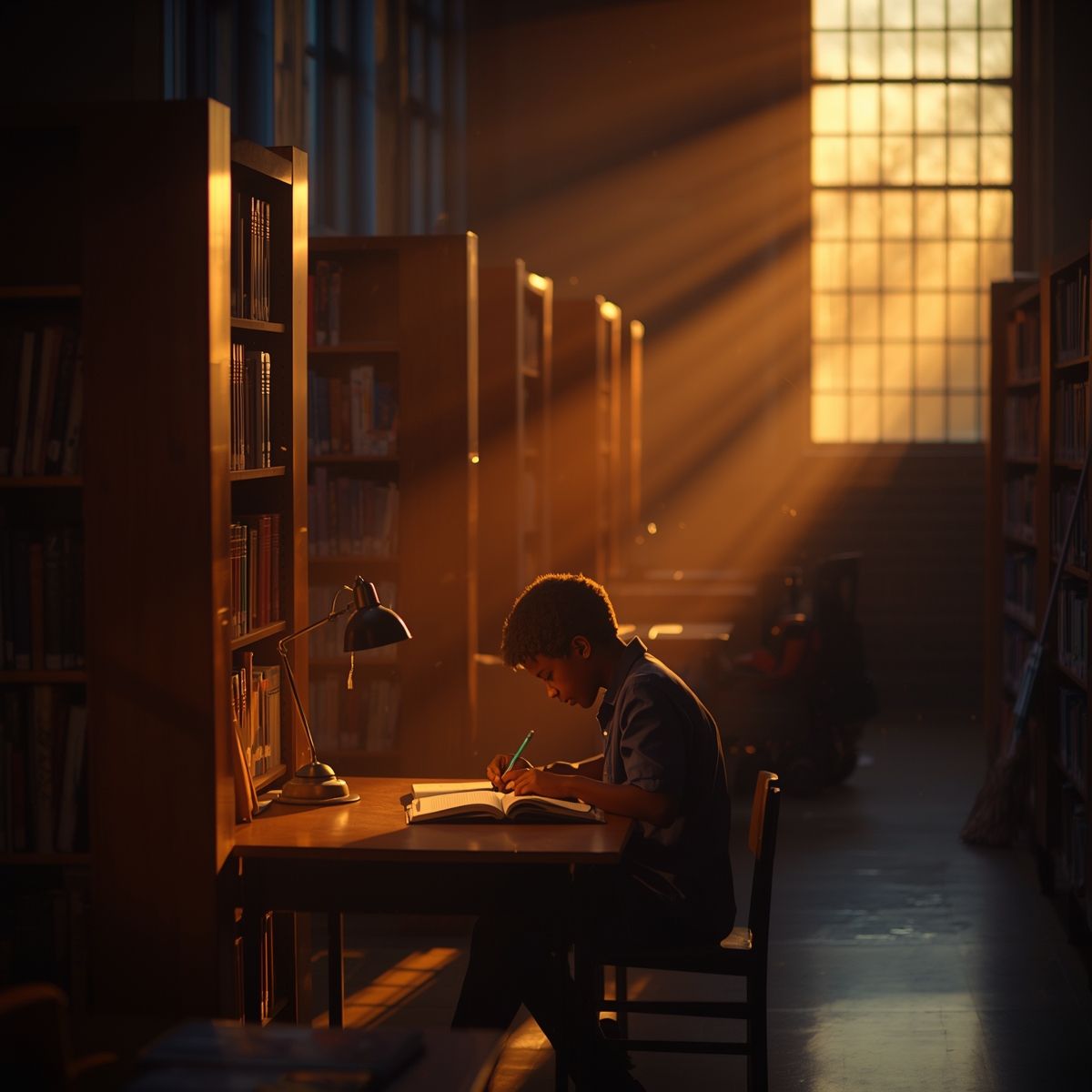
One night, Maria noticed a freshman named Devon sitting on the front steps at 8 PM, backpack open, squinting at his textbook under the streetlight. "No internet at home," he explained when she asked. “Library's the only place I could study, but...”
That weekend, Maria used her savings to buy a padlock and made a decision. She started opening the library door for Devon. Then Devon brought his friend Amara. Amara brought three others. Within weeks, twenty students were staying after school, studying in the forgotten library while Maria worked nearby.
A teacher discovered them and, moved by what she saw, volunteered to supervise. Other teachers joined. Parents donated books. The principal, confronted with this grassroots movement, found emergency funding to officially reopen the library.
Five years later, Devon gave the valedictorian speech. He spoke about how his college acceptance letter should really be addressed to a janitor who believed that everyone deserves a place to learn. Maria sat in the audience, crying, finally understanding that education isn't just about what schools provide—it's about what people refuse to let die.