VOTES FOR SALE: INSIDE NIGERIA'S EXPANDING ELECTORAL MARKETPLACE
By: Abubakar Basiru
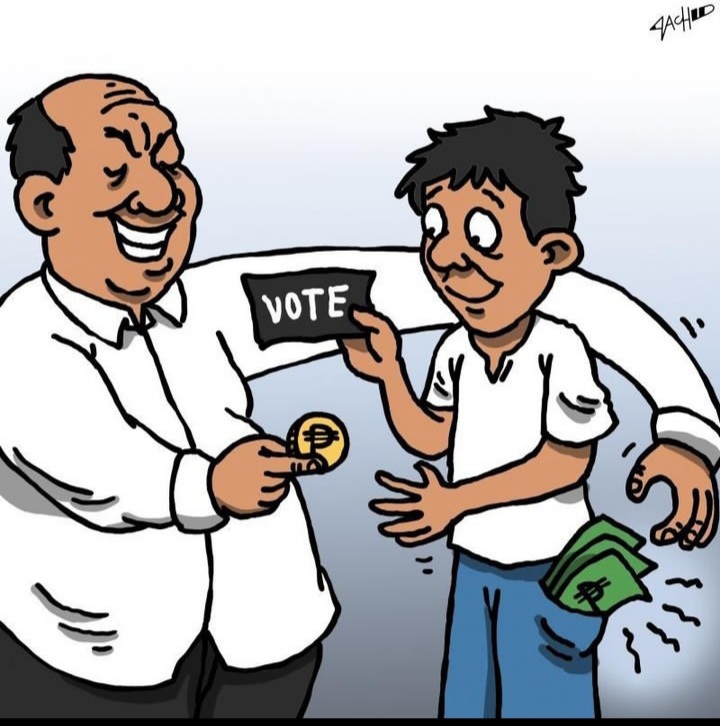
On election days in Nigeria, the queues form early. Voters gather under the rising sun, clutching their voter cards, hopeful that their participation will shape the future. But behind the scenes, a quieter transaction often unfolds. A few meters away from polling units, envelopes exchange hands. Spaghetti and bags of rice are distributed, transfers are confirmed while democracy becomes negotiable.
Vote buying in Nigeria is neither accidental nor unplanned action. It is deliberate, organized, and deeply woven into the country’s political culture. What was once whispered about has evolved into a structured system, turning elections into a multi-billion naira enterprise.
POLITICKING AS INVESTMENT
For decades, Nigeria's political arena has resembled a marketplace more than a contest of ideas. Campaign seasons attract staggering financial outlays. Billions are spent on mobilization, logistics, advertisements, and, increasingly, direct inducements to voters.
But elections are not charity events. For many political actors, campaign spending is treated as capital investment. Victory at the polls becomes the gateway to recovering that investment through contracts, appointments, and access to public resources. Governance, in such a system, risks becoming less about service and more about returns.
The logic is simple: once a politician pays for your vote, governance becomes a business transaction and every business seeks profit. Good representation cannot emerge from a foundation of bribery. Corruption does not begin inside government offices. It begins at polling units, where desperate politicians meet willing voters.
THE PRICE OF SURVIVAL
Why does vote buying persist despite widespread public frustration? The answer lies partly in economic reality. With over 200 million citizens and millions battling unemployment and rising living costs, poverty becomes fertile ground for political manipulation. When survival is uncertain, immediate relief can outweigh long-term term consequences. A plate of food today can feel more urgent than promises of policy reform tomorrow.
Political actors understand this vulnerability. Poverty is not merely an unfortunate social condition. It becomes a strategic tool. Hunger weakens resistance and reduces democratic participation to short-term term bargaining.
Yet the cost of that bargain is often invisible. Poor infrastructure, underfunded schools, fragile healthcare systems, and persistent insecurity are not disconnected from the ballot box. They are, in many ways, its aftermath.
WHEN PRINCIPLES YIELD TO PERSONALITIES
Beyond poverty, another force sustains the cycle is selfishness as well as sentiment. Many people nowadays defend personal interest rather than what is right. It is heartbreaking seeing political discourse thrives on social media platforms, where personalities often overshadow principles. Selfish social media influencers promote unqualified candidates for personal gain, amplifying propaganda over performance. Yet the most important calculation Nigerians must make is here is: what is the future cost of today's decision?
Also, within party structures, the pattern repeats itself. Delegates entrusted with selecting flag bearers are expected to prioritize merit and vision as well as patriotism. Too frequently, financial inducements determine outcomes long before voters arrive at polling units. Democracy begins to fracture long before election days.
BREAKING THE CYCLE
Ending vote buying requires more than moral appeals. It demands structural reforms. Economic stability is central. A citizen secure in livelihood is less susceptible to inducement. Addressing unemployment, inflation, and food insecurity is therefore not only an economic imperative but a democratic safeguard.
Legal enforcement must also move beyond rhetoric. Electoral malpractice laws exist, but consistent prosecution and meaningful penalties remain compromised. Without consequences, normalization sets in. Campaigns involving financial inducement should attract immediate disqualification. Vote buying must not be normalized as political culture. It must be treated as the criminal offense it is. One should be wise enough to understand that any candidate that has to pay for votes doesn't deserve any public office.
In due course, the decisive shift must come from citizens. The ballot is one of the most powerful instruments in any democracy. When exchanged for cash or commodities, its value diminishes not only for the individual but for the nation. Nigeria’s future cannot be mortgaged for temporary relief. Democracy is strongest when votes are earned through credibility, vision, and integrity not purchased through desperation.
The masses are the ones shaping the future of our country through our decisions. Leadership is not a privilege reserved for the wealthy or a chosen few. Think of it this way: one idiot is one idiot, two idiots are two idiots, but ten million idiots form a political party.
As the next election cycle approaches, one question lingers: will Nigerians continue to treat their votes as survival currency, or will they reclaim them as instruments of transformation?
The answer may determine whether our political arena will continue to remain a marketplace or finally become a platform for authentic leadership and nation building.