Hope Is Still Alive: Changing the Story of Rural Youth
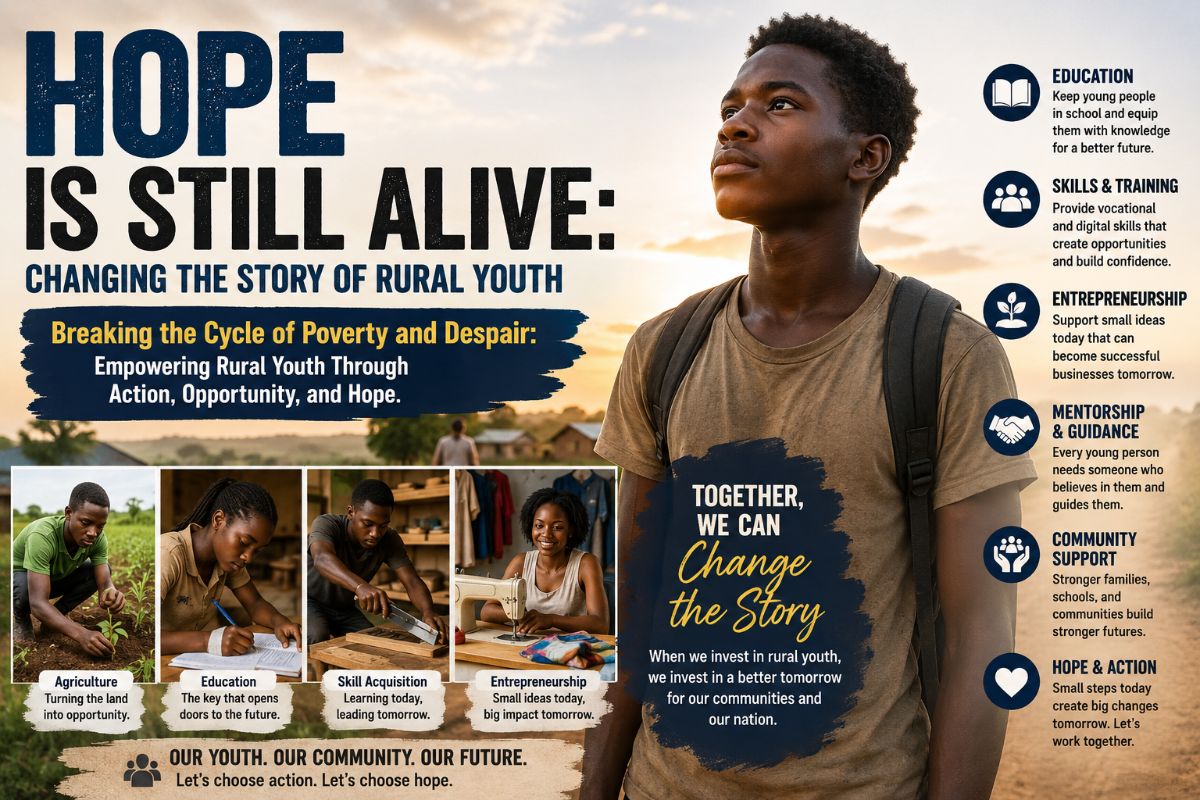
Breaking the Cycle of Poverty and Despair: Empowering Rural Youth Through Action, Opportunity, and Hope
For many young people in rural communities, poverty is more than a lack of money. It is a daily battle against hunger, unemployment, poor education, drug abuse, crime, and the feeling that their dreams no longer matter. Many give up because they see no opportunities ahead.
Yet hope is still alive. The story can change.
Yes it can!
The first step is creating opportunities. Governments, private organizations, and community leaders must invest in vocational training, entrepreneurship, agriculture, and digital skills. When young people have practical skills and access to small business support, they are more likely to become job creators instead of job seekers.
Education must also be made more accessible. Scholarships, affordable learning materials, and mentorship can help young people stay in school and build a better future.
Communities also have a role to play. Parents, teachers, religious leaders, and local organizations should guide and encourage young people instead of ignoring their struggles. Every young person needs someone who believes in them.
Young people must also take responsibility for their future. They should avoid crime, drug abuse, and negative peer pressure, while remaining open to learning new skills and making the most of available opportunities. Success may not come overnight, but consistent effort creates lasting change.
Breaking the cycle of poverty and despair requires everyone to work together. When families, communities, governments, and young people take action, rural communities can become places of hope instead of hopelessness.
The future of rural youth is not determined by where they were born, but by the opportunities they are given and the determination to seize them. Hope is still alive, and together we can change the story.