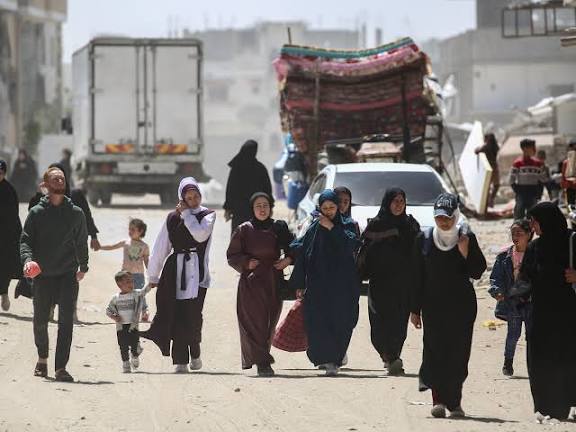
The United States has imposed sweeping sanctions on Rwanda’s defence forces and several senior military officers, accusing them of fuelling the conflict in the eastern Democratic Republic of Congo and undermining a fragile US-brokered peace deal.
US officials say Rwandan Defence Force units and commanders have provided decisive backing to the M23 rebel movement, whose offensives have displaced hundreds of thousands of civilians and destabilised a region rich in cobalt, coltan, gold, and other strategic minerals.
Washington argues that Rwanda’s actions violate a peace agreement signed between Kigali and Kinshasa under American mediation. That accord was hailed in Washington as a breakthrough after years of proxy warfare and militia violence in eastern Congo, and was explicitly tied to securing more reliable access to critical minerals for US industry.
Despite those commitments, M23 fighters, widely described by UN experts and Western diplomats as Rwanda-backed, went on to seize key territory, including the strategic city of Uvira, before pulling back under intense diplomatic pressure. The US Treasury now says such gains would have been “impossible” without Rwandan military support.
US officials frame the sanctions as both punitive and symbolic. The measures freeze any assets belonging to the Rwandan Defence Force or the named officers that fall under US jurisdiction and criminalise financial transactions with them by US persons or entities. They also reinforce existing US and UN sanctions on M23 itself.
State Department spokesman Tommy Pigott said M23 is responsible for “horrific human rights abuses, including summary executions and violence against civilians, including women and children,” and warned that external support to the group would no longer be tolerated.
Kigali has rejected the accusations, insisting it does not control M23 and arguing that the sanctions unfairly single out Rwanda while ignoring what it calls Congo’s collaboration with hostile militias operating near the shared border. The Rwandan government says it remains committed to withdrawing its forces in step with Congolese compliance under US-led mediation, but accuses Kinshasa of failing to honour its own pledges.
The move marks a sharp downturn in relations between Washington and Kigali, once seen as a close security and development partner of the US and key European powers. It also injects new uncertainty into international efforts to stabilise eastern Congo, where overlapping conflicts, ethnic tensions, and competition for mineral wealth have defied peace initiatives for decades.






.jpeg?alt=media&token=b3335771-c11d-4f8b-ae31-55463f8c6c43)