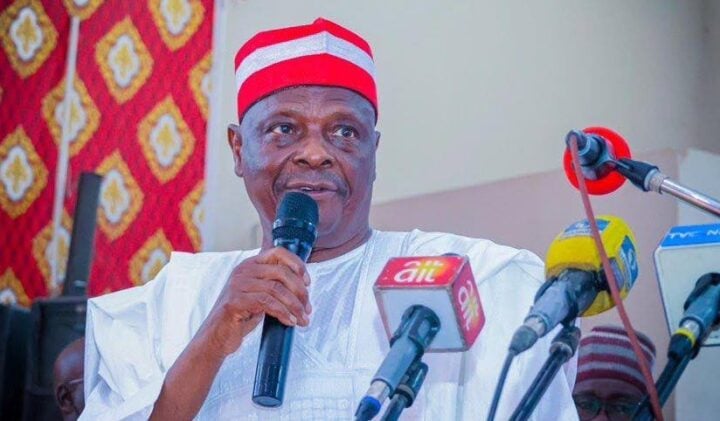
Senator Rabiu Musa Kwankwaso, former governor of Kano State and national leader of the New Nigeria Peoples Party NNPP, has laid down an uncompromising condition for any political alliance ahead of the 2027 general elections: he will only align with a party prepared to offer him either its presidential ticket or the vice-presidential slot.
Speaking before a large gathering of his Kwankwasiyya supporters at his Miller Road residence in Kano, Kwankwaso framed the coming election cycle as a decisive moment both for his movement and for Nigeria’s political direction. The meeting, attended by party loyalists, grassroots mobilisers and key figures in the NNPP, was convened to review ongoing political realignments and to clarify his position amid growing speculation about his next move.
At the heart of his message was a clear assertion of his political value and ambition. According to attendees, Kwankwaso told the gathering that discussions were ongoing with various political actors across the country, but that he would not enter into any alliance that relegated him or his movement to the margins.
“At the national level, we are looking for a political party to align with,” he said, addressing the crowd in Hausa and English. “But it must be a party that will offer me either the presidential ticket or the vice-presidential slot.”
The statement instantly reverberated through Nigeria’s political space, underscoring Kwankwaso’s determination to remain a central player in the 2027 race. It also signalled that, despite leading a relatively young party, he sees himself not as a junior partner in any coalition but as a principal contender for power.
Kwankwaso’s posture is rooted in his performance in the 2023 presidential election, where he emerged as a significant third-force candidate. While he did not win, his strong showing in Kano and parts of the North West demonstrated that he commands a loyal base capable of influencing national outcomes. That performance has since made him a sought-after figure in conversations about future alliances, particularly among parties seeking to strengthen their northern appeal.
His latest remarks come against the backdrop of persistent rumours that Kano State Governor Abba Kabir Yusuf, elected on the NNPP platform and widely seen as Kwankwaso’s political protégé, might defect to the ruling All Progressives Congress APC. The speculation has been fuelled by reports of behind-the-scenes outreach from APC figures eager to reclaim Kano, one of the country’s most politically strategic states.
Kwankwaso, however, dismissed such talk as fanciful. Reacting directly to the reports, he described the idea of Governor Yusuf abandoning the NNPP for the APC as “nothing but a dream,” insisting that the governor remained firmly rooted in the Kwankwasiyya ideology and the party structure that brought him to power.
His rebuttal was aimed not only at calming his supporters but also at sending a message to rival parties that the NNPP’s hold on Kano is not easily negotiable. Kano, with its massive voting population and symbolic weight in northern politics, has long been a battleground for national influence. For Kwankwaso, retaining control of the state is central to any credible bargaining position ahead of 2027.
Beyond the question of defections, Kwankwaso used the gathering to launch a broader critique of the current political order under President Bola Ahmed Tinubu and the APC. He argued that the ruling party’s emphasis on the number of governors and elected officials under its banner is a misleading measure of its true electoral strength.
According to him, the assumption that a party with the highest number of governors automatically enjoys an electoral advantage is flawed. He maintained that credibility, performance in office and genuine popular support are more decisive factors in determining who wins national elections.
He pointed to growing public dissatisfaction over economic hardship, insecurity and perceived governance failures as evidence that incumbency and numerical dominance may not translate into victory in 2027. In his view, Nigerians are increasingly willing to look beyond party labels and established structures in search of leaders they consider competent and trustworthy.
Kwankwaso’s comments reflect a broader debate within Nigeria’s political class about the durability of the APC’s dominance and the prospects for a realignment that could challenge the two-party configuration largely defined by the APC and the Peoples Democratic Party PDP. His insistence on a top-tier role in any alliance suggests he believes the NNPP and the Kwankwasiyya movement can serve as a pivot for such a realignment rather than merely attaching themselves to an existing bloc.
Analysts note that his strategy carries both opportunity and risk. On one hand, his demand for a presidential or vice-presidential ticket signals confidence and may strengthen his negotiating hand with parties that see him as a gateway to northern votes. On the other hand, it could narrow his options if larger parties are unwilling to concede such a prominent slot to a partner they still view as an outsider.
Within the NNPP, his stance is likely to energise supporters who see him as their best chance at national relevance. The Kwankwasiyya movement, which began as a reformist current within the PDP before evolving into a distinct political identity, has built a reputation for disciplined grassroots organisation, particularly in Kano and neighbouring states. Many of its adherents view Kwankwaso not just as a politician but as a symbol of alternative governance and social mobility.
As the 2027 race slowly takes shape, Kwankwaso’s declaration adds a new layer of complexity to the calculations of both the ruling party and the opposition.