NAME: Esan Folakemi Oyindamola
MATRIC NO: 230902047
SCIENCE AND TECHNOLOGY REPORTING
ASSIGNMENT: Choose a particular aspect of science and technology and begin writing about it.
Space technology is one of the most important and rapidly developing aspects of science and technology in the modern world. It refers to the use of scientific knowledge, engineering, and advanced equipment to explore and use outer space for different purposes. Space technology includes rockets, satellites, spacecraft, telescopes, and space stations that help humans understand the universe and improve life on Earth. Over the years, this aspect of science has moved from being mainly for scientific discovery to becoming an important part of communication, transportation, security, and economic development.
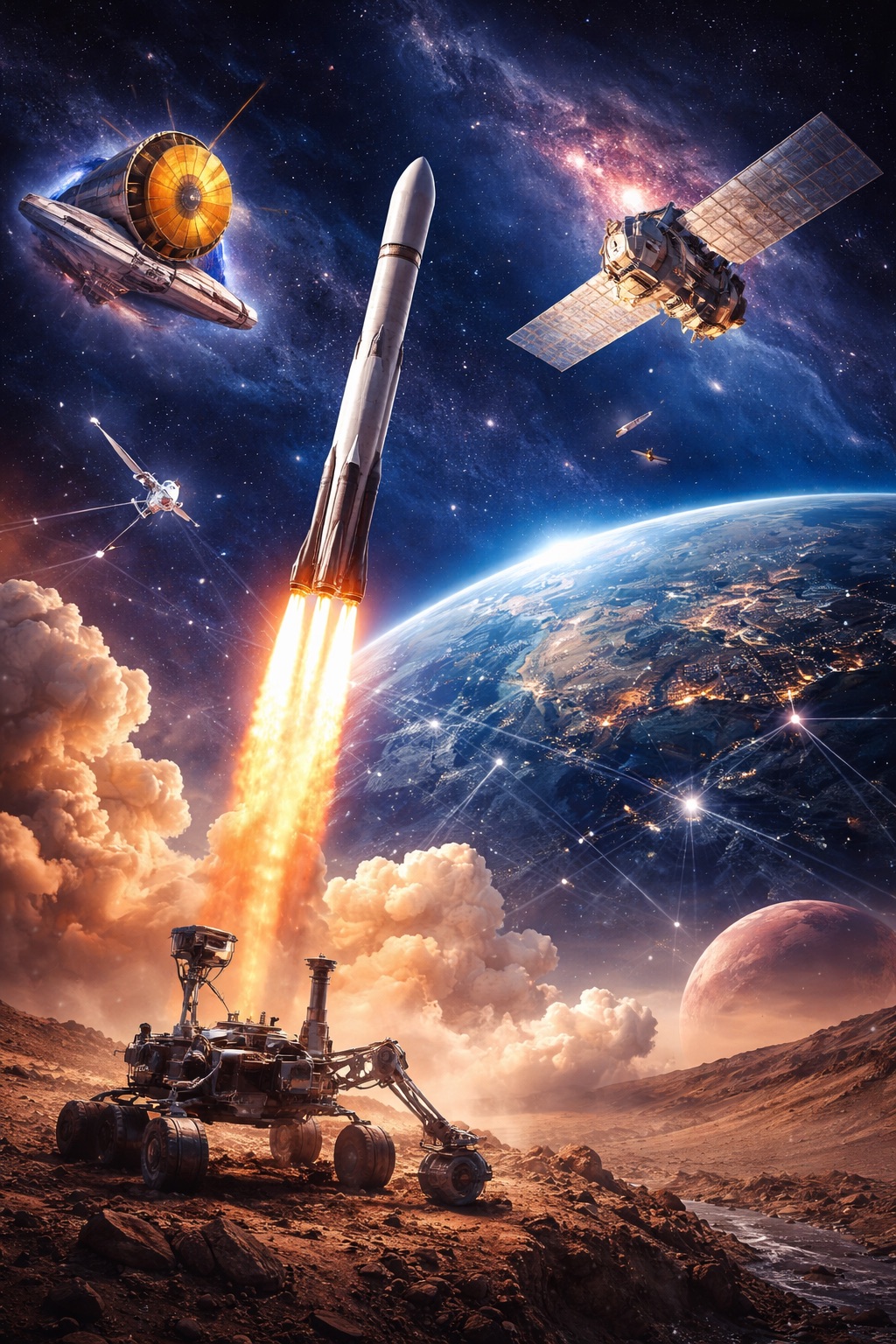
One major area of space technology is rocket development. Rockets are powerful machines designed to carry satellites, astronauts, and scientific instruments beyond Earth’s atmosphere. In earlier years, rockets were single-use, meaning that once launched, most parts were destroyed after completing their mission. This made space exploration extremely expensive. However, modern companies such as SpaceX have changed this through reusable rockets that can land safely after launch and be used again. This innovation has reduced launch costs and made space missions more frequent and accessible.
Satellites are another major contribution of space technology. A satellite is an object placed in orbit around the Earth to collect or transmit information. Communication satellites make it possible for people in different parts of the world to communicate through television, radio, telephone, and internet services. Weather satellites help scientists monitor cloud movement, rainfall, storms, and climate changes, making weather forecasting more accurate. Navigation satellites also support transport systems by helping ships, aircraft, and vehicles determine exact locations through GPS technology.
Space technology has also greatly improved scientific research and planetary exploration. Scientists use robotic spacecraft and rovers to explore planets such as Mars and gather information about their surface, atmosphere, and climate. These missions are important because they help scientists understand whether life ever existed on other planets and whether humans may one day live beyond Earth. Telescopes placed in space, such as James Webb Space Telescope, allow astronomers to observe distant stars and galaxies more clearly than ground telescopes because they are above Earth’s atmosphere.
Another important benefit of space technology is its role in security and disaster management. Satellites are used by governments to monitor borders, track environmental changes, and detect natural disasters such as floods, wildfires, and droughts. In agriculture, satellite images help farmers study soil conditions, crop health, and rainfall patterns, leading to better food production. In emergencies, satellite communication becomes especially useful when normal communication systems fail.
Despite these advantages, space technology also faces challenges. It requires very high financial investment, advanced technical skills, and international cooperation. Another growing concern is space debris, which includes broken satellites and rocket parts left in orbit. These objects can collide with active satellites and create serious risks for future missions.
In conclusion, space technology remains a vital aspect of science and technology because of its wide influence on communication, research, security, transportation, and development. As scientific knowledge continues to grow, space technology will likely play an even greater role in shaping the future of humanity, opening new opportunities for exploration and innovation beyond Earth