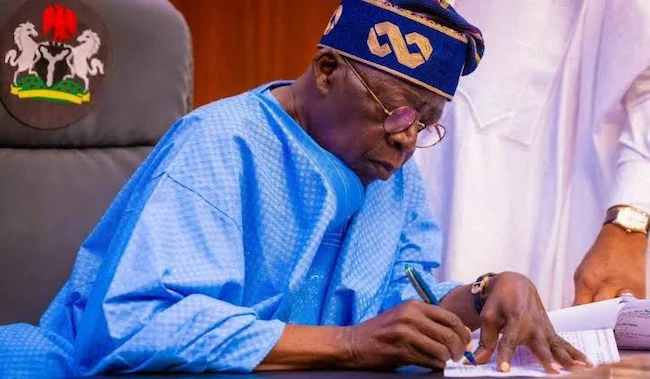
A presidential aide has claimed that industrial action by the Academic Staff Union of Universities has significantly reduced under President Bola Tinubu’s administration, arguing that the government’s “deliberate interventions” in the education sector are beginning to yield results.
Dada Olusegun, Special Assistant to the President on Social Media, made the assertion in a statement shared on his X handle, insisting that ASUU has embarked on strike only once since the advent of the Renewed Hope administration. He described that action as a nine-day warning strike, contrasting it with what he called the “annual” and prolonged shutdowns that characterised previous administrations.
“The Academic Staff Union of Universities (ASUU) has only gone on strike once since the inception of the Renewed Hope administration about three years ago; a warning strike that lasted for nine days
This feat, which marks a different trajectory from the previous annual strikes, did not happen by chance; it was made possible by deliberate efforts of the government over the past three years,” Olusegun said.
His comments come against the backdrop of a long and fraught history of industrial disputes between ASUU and the Federal Government, often centred on funding shortfalls, unpaid allowances, and unimplemented agreements. Nigeria’s public universities have repeatedly been shut for months at a time, disrupting academic calendars and leaving students stranded.
Under former administrations, ASUU strikes became a recurring feature of the academic landscape. One of the most disruptive in recent memory was the eight-month strike that began in 2022, which paralysed academic activities nationwide and deepened public frustration with the state of tertiary education.
While no prolonged, full-scale strike has been recorded since Tinubu assumed office, ASUU has not been entirely quiet. The union has issued several ultimatums and embarked on brief warning actions over unresolved issues, including funding gaps, earned academic allowances, and the implementation of previous agreements. These actions, though short-lived, have served as reminders that the underlying tensions have not fully disappeared.
Olusegun, however, maintains that the administration has made substantial progress in addressing the root causes of the disputes. He pointed to what he described as a “major breakthrough” in renegotiating the long-standing 2009 agreement between ASUU and the Federal Government, a document that has been at the heart of many of the union’s demands.
“With a major breakthrough for the longstanding issue now announced by the FG following the renegotiation of the 2009 agreements, we might have placed a final nail on the coffin of ASUU strikes,” he said, suggesting that the latest round of negotiations could usher in a more stable era for public universities.
The 2009 agreement, and subsequent memoranda of understanding and action, covered a wide range of issues: university funding, staff welfare, revitalisation of infrastructure, and autonomy for institutions. Successive governments have struggled to fully implement its provisions, leading to repeated breakdowns in relations with the union.
In his statement, Olusegun outlined a series of measures he said were introduced under the Renewed Hope agenda to tackle these long-running problems. One of the most notable, he claimed, was the removal of federal universities and other tertiary institutions from the Integrated Personnel and Payroll Information System, IPPIS.
ASUU had long opposed IPPIS, arguing that the centralised payroll platform undermined university autonomy and created bureaucratic bottlenecks. According to Olusegun, exempting universities from IPPIS has allowed them to process their own payrolls, a move he said enhances institutional independence and addresses one of the union’s core grievances.
He also highlighted what he described as an “expanded negotiation committee” that brings all tertiary education unions under a single framework. This, he argued, has helped streamline discussions and reduce the fragmentation that often complicates labour relations in the sector.
On funding, Olusegun said the Federal Government has made fresh financial commitments aimed at revitalising public universities. He cited an allocation of ₦150 billion in the 2025 budget for university revitalisation, to be released in three tranches of ₦50 billion each. The funds, he suggested, are intended to address decaying infrastructure, overcrowded facilities, and the broader quality gap that has plagued public institutions.
In addition, he said ₦50 billion has been released for earned academic allowances, a recurring flashpoint in negotiations with ASUU. These allowances, owed to lecturers for extra teaching, supervision, and other academic duties, have often been delayed or partially paid, fuelling resentment and contributing to strike actions.
Olusegun further referenced what he called a “landmark agreement and salary review” signed on January 14, 2026, which he presented as evidence of the administration’s willingness to improve the welfare of academic staff. While full details of the agreement have not been widely publicised, the aide framed it as part of a broader effort to make academic careers more attractive and sustainable.
Beyond direct negotiations with ASUU, the presidential aide linked the government’s approach to a wider reform agenda in the education sector. He pointed in particular to the Nigerian Education Loan Fund, NELFUND, which the administration has promoted as a flagship initiative to expand access to higher education by providing interest-free loans to eligible students.
According to Olusegun, NELFUND and other interventions are designed to ease the financial burden on students and families while complementing efforts to stabilise the academic calendar. The logic, he suggested, is that a more predictable university system, backed by improved funding and staff welfare, will gradually restore public confidence in public tertiary institutions.
However, while the presidency is keen to present the reduced frequency of strikes as a clear success, analysts and stakeholders caution that the situation remains fragile. ASUU leaders have repeatedly warned that the union’s patience is not unlimited and that any failure to honour new commitments could trigger fresh industrial action.
Education experts also note that the absence of prolonged strikes, though welcome, does not automatically translate into improved teaching quality, research output, or global competitiveness. They argue that sustained investment, transparent implementation of agreements, and genuine institutional autonomy will be required to reverse years of underfunding and neglect.
For now, the Tinubu administration is eager to claim that it has changed the trajectory of government–ASUU relations. By its own account, the combination of renegotiated agreements, targeted funding, payroll reforms, and student-focused initiatives has helped keep campuses open and lectures ongoing.
Whether this marks the beginning of a lasting peace in Nigeria’s public universities, or merely a temporary lull in a long-running cycle of disputes, will depend on how faithfully the new promises are kept and how quickly the impact is felt in lecture halls, laboratories, and student hostels across the country.