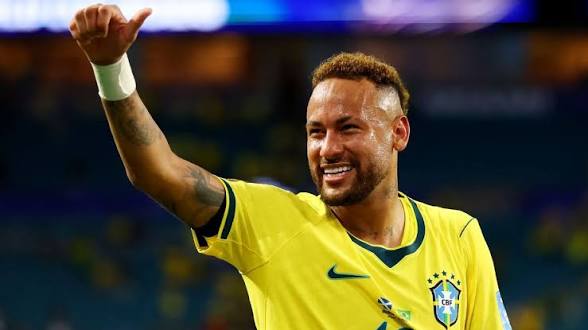
Neymar has turned a German mathematician’s failed World Cup forecast into a running joke, using social media to mock predictions that had Brazil crashing out early and the Netherlands crowned champions.
The Brazilian star took aim at Joachim Klement, a German analyst known for building statistical models to forecast World Cup outcomes. Before the tournament, Klement’s model had suggested Brazil would fall to Japan in the Round of 32, with the Netherlands ultimately lifting the trophy.
Instead, Brazil overturned that script on the pitch. Trailing Japan in Houston, they rallied to win 2-1 and secure a place in the last 16, keeping their campaign alive and instantly undermining Klement’s carefully constructed projections.
Neymar, watching the narrative flip, went straight to X to deliver his first jab. “Mr. Joachim Klement... Please try again at the next World Cup,” he wrote, turning a dry statistical miss into a global punchline for his millions of followers.
The forward, Brazil’s all-time leading scorer with 79 goals, was not done. Hours later, another pillar of Klement’s model collapsed when the Netherlands were eliminated by Morocco on penalties after a 1-1 draw. Neymar seized the moment again, posting a second message on X: “You got it wrong again.”
Klement’s misfire was notable because of his previous success. Using an economic and statistical framework, he had correctly anticipated the winners of the last three tournaments: Germany in 2014, France in 2018 and Argentina in 2022. His latest model factored in GDP per capita, population, football’s cultural importance, FIFA rankings and a built-in element of chance.
Even so, Klement had cautioned that predicting a World Cup champion was “practically impossible” and urged people not to treat his work as anything more than an educated guess. Neymar’s posts underlined that point in the most public way possible, turning a theoretical exercise into locker-room material.
Neymar is appearing at his fourth World Cup but has featured sparingly so far, coming off the bench in a 3-0 win over Scotland. From the sidelines, though, he has found another way to influence the tournament: by reminding statisticians that football, ultimately, is played on grass, not spreadsheets.