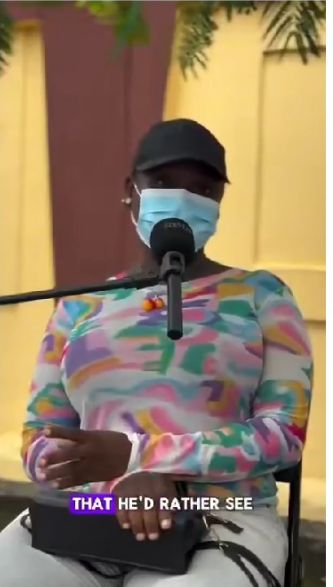
A young Nigerian woman has shared how her decision to leave Islam and embrace Christianity shattered the peace in her once close-knit family and nearly cost her a relationship with her father.
In a candid roadside interview, she recounted growing up in what she described as a warm, disciplined Muslim home. Her parents, she said, were devoted to giving her a solid Islamic upbringing, enrolling her in Qur’anic classes and ensuring she observed prayers and religious practices from childhood.
At the same time, she attended mostly Christian schools, where morning assemblies, hymns and Bible readings were part of daily life. Those contrasting environments, she explained, quietly planted questions in her mind about faith, salvation and the nature of God.
For years, she kept those questions to herself, afraid of being misunderstood. The turning point came when she moved to northern Nigeria for tertiary education. There, she met her now-fiancé, a gospel artist, whose life and convictions drew her curiosity rather than her immediate agreement.
Through him, she was introduced to Bible study groups and Christian fellowship meetings. She said she did not convert overnight; instead, she spent years reading, comparing scriptures and asking difficult questions about both religions. The more she studied, the more she felt drawn to Christianity.
Eventually, she made what she called the hardest decision of her life: to publicly identify as a Christian. Informing her parents, however, brought the emotional cost into sharp focus.
According to her, her father reacted with shock and fury. She recalled him saying, “I would rather see you dead than convert to Christianity.” The words, she said, cut deeply, not only because of their severity but because they came from a man she had always admired and loved.
Despite the rejection, she insists her decision was not an act of rebellion but a response to what she believes is God’s call on her life. She expressed hope that, in time, her family will come to understand her choice, even if they never fully agree with it.
For now, she continues to navigate the tension between her new faith and her family’s expectations, holding on to the belief that reconciliation is still possible.