On the parched outskirts of Hargeisa, the furrows on Faysal Omar Salah’s family farm crumble into dust. Months have passed without a drop of rain. His two children no longer attend school; the family survives on milk from a dwindling herd of cattle.
“We are desperate,” Salah said, scanning the cracked earth where his crops once grew.
Nearby, the Lallays reservoir tells the same story. Once a vital water source, it is now a dry basin where camels pick at sparse wild plants. Locals say no meaningful rain has fallen here for many months, in what used to be one of Somaliland’s wettest areas.
“If the rain crisis continues, we will just leave this land and go to a town,” Salah said. He prays for relief, but his hopes also rest on a distant partner: Israel. “We hope Israel will help us cultivate our dry land.”
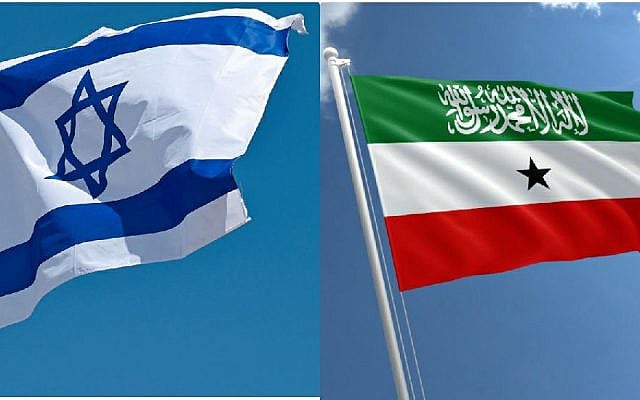
Somaliland’s self-declared republic, long isolated diplomatically, has turned to Israel for help in confronting a deepening water crisis. Israeli officials have signalled a focus on civilian cooperation, particularly in water, agriculture, health, and economic development.
Israel, itself an arid country, has become a global reference point in water management. It recycles the vast majority of its wastewater and relies heavily on large-scale desalination plants for drinking water. That expertise is now being deployed as a diplomatic tool in climate-stressed regions.
Somaliland’s Ministry of Agriculture says rainy seasons have been late and weak for at least five years, driving recurrent droughts and shrinking harvests. Only a tiny fraction of the territory’s land is under cultivation, and officials hope Israeli know-how can help change that.
“Inshallah, Israel is going to help us changing our practices. Because if you want to change practices, you need to have knowledge,” said ministry official Mokhtar Dahir Ahmed.
Some 90 percent of Somaliland’s farmers depend entirely on rainfall, according to agronomist Abdirazak Sheikh Muhamad. “The nutritional situation is very bad and malnutrition is increasing,” he warned. Regional assessments by humanitarian agencies indicate that millions across Somalia, including Somaliland, face severe food insecurity linked to water scarcity.
Yet not everyone is waiting for foreign assistance. A few kilometres from Salah’s barren fields, farmer Muhummad Mohamad Ismail tends thriving orange and papaya trees. After losing more than half his 150 trees to drought, he changed his methods: digging basins around trunks to trap water and covering them to reduce evaporation. He sold livestock to build a concrete reservoir, refilled by water trucks several times a year.
The investment was costly, but his orchard now stands as a rare patch of green. “Everything I do is linked to water,” he said. “If there is no water, there is no life.”