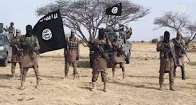
The Nigerian Army has announced a major breakthrough in its campaign against insurgency in the North-East, confirming the killing of a senior Islamic State West Africa Province commander, Mohammed Khalifa, and the surrender of two other high-ranking figures in Borno State.
The development was disclosed by the Acting Media Information Officer of the North-East Joint Task Force, Operation Hadin Kai, Lt Col Haruna Sani. He said the two commanders, identified as Ismail Mohammed and Abu Umar, turned themselves in to troops after sustained military pressure in the Lake Chad region.
According to Sani, both men held strategic positions within ISWAP’s hierarchy and operated in the Mangari axis, a long-contested corridor used by the group for logistics, recruitment and cross-border movement. Their surrender, he noted, followed a series of coordinated ground and air operations targeting terrorist enclaves and supply routes.
Preliminary debriefings revealed that Ismail Mohammed was a close associate of senior ISWAP figure Baa Shuwa and possessed detailed knowledge of the group’s command structure, internal communications and operational planning. Security sources say such insight could prove critical in mapping the network’s remaining cells and disrupting future attacks.
Abu Umar was described as a specialist in explosives, responsible for fabricating and maintaining vehicle-borne improvised explosive devices and other combat-support equipment. His expertise had reportedly underpinned several attempted attacks on military convoys and civilian targets in the region.
During the same phase of operations, troops of Operation Hadin Kai, working with allied air and intelligence assets, neutralised Mohammed Khalifa, identified as a member of ISWAP’s Shura Council, the group’s top decision-making body. His death is seen by military analysts as a significant blow to the organisation’s leadership cohesion and strategic planning.
Sani said the combination of targeted strikes and the defection of experienced commanders signalled a deepening crisis within ISWAP ranks, marked by declining morale, internal distrust and shrinking safe havens. He added that the army would continue to exploit intelligence from surrendered fighters to locate remaining strongholds and interdict arms supplies.
Operation Hadin Kai, he stressed, remains committed to maintaining unrelenting pressure on terrorist elements across the North-East, with the broader goal of restoring security, enabling displaced communities to return home and consolidating gains made in recent counter-terrorism efforts.
.jpeg?alt=media&token=96b327a5-8e62-4ed1-a078-308aff149ed1)