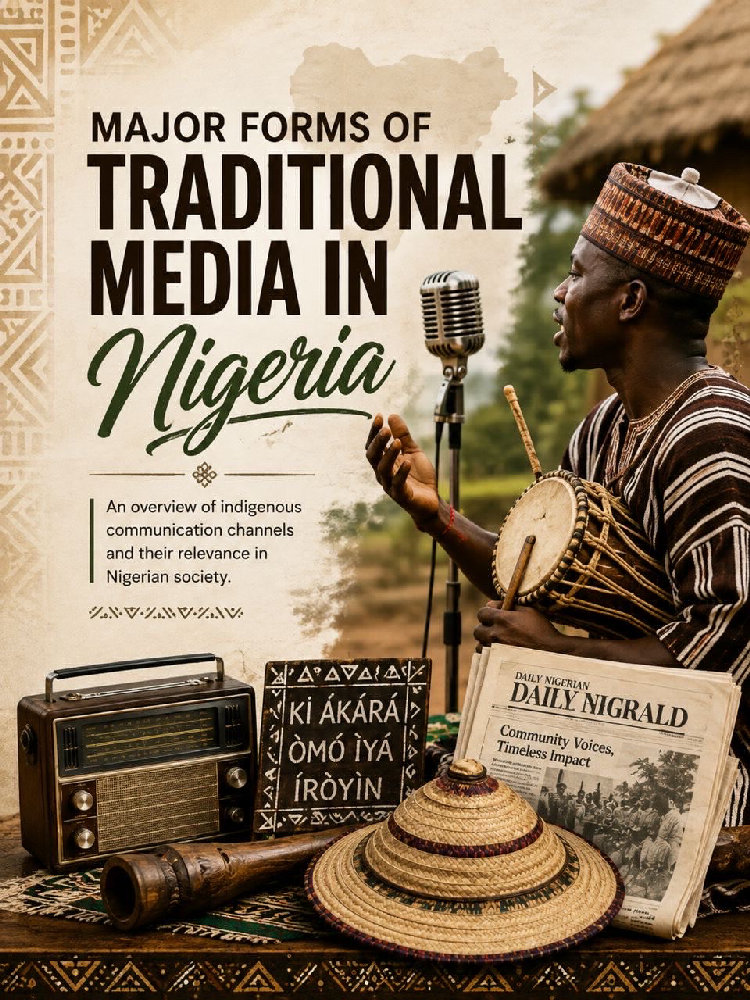
MAJOR FORMS OF TRADITIONAL MEDIA IN NIGERIA.
Introduction:
Traditional media refers to the indigenous ways Nigerians have used to communicate and share information within their communities.
They have played an important role in preserving culture, educating people and passing information from one generation to another.
Major Forms of Traditional Media in Nigeria:
There are different forms of traditional media used in Nigeria to communicate information within communities.
Some of the major forms include:
1. Town Criers: People who move around communities announcing important information to the public.
2. Drumming and Talking Drums: Used to communicate messages, announce events and summon people.
3. Gong/Metal Gong: Used to make public announcements and call community members together.
4. Folk Songs and Music: Used to pass information, preserve history and educate people.
5. Folktales and Storytelling: Used to teach morals, history, culture and community values.
6. Proverbs and Riddles: Used to communicate wisdom, advice and important social messages.
7. Traditional Theatre and Dance: Used to educate, entertain and communicate cultural or social issues.
8. Market Square/Community Meetings: Used for public discussions, announcements and sharing community information.
9. Symbols and Signboards: Traditional signs, objects or markings used to convey specific messages.
10. Fire/Smoke Signals: Historically used in some communities to send simple signals over distances.
Importance of Traditional Media in Nigeria:
Traditional media is important in Nigeria because it helps to preserve culture, values and traditions from one generation to another.
It is also used to pass important information within communities, educate people about their history and customs, and provide entertainment through folk tales, music and dances.
It also helps to bring people together and encourages unity and participation in community activities.
Conclusion:
Traditional media has played an important role in communication and cultural preservation in Nigeria. It predates colonialism, while modern Nigerian mass media began in 1859 with the establishment of Iwe Iroyin. Unlike modern media, traditional media has no definite end date because indigenous forms of communication such as the town crier, talking drum, folk tales, music and dance are still practiced in many Nigerian communities today. It therefore remains an important part of Nigerian culture and communication.
3