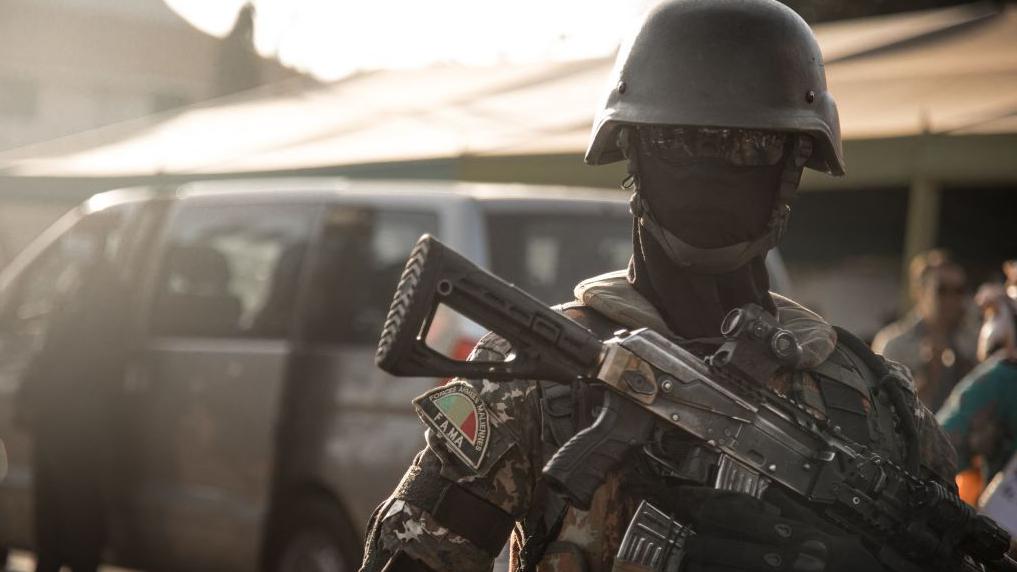
The Sahel region of Africa has consolidated its grim status as the world’s deadliest hotspot for terrorism, accounting for nearly half of all terror-related deaths worldwide for a third consecutive year, according to the latest Global Terrorism Index published by the Institute for Economics and Peace.
The index, which assesses 163 countries, measures the impact of terrorism through the number of attacks, fatalities, injuries and hostages. It defines terrorism as the systematic threat or use of violence by non-state actors, either supporting or opposing established authorities.
Data in the report shows a dramatic geographic shift in global violence. In 2007, the Sahel was responsible for just one percent of terrorism deaths. Since then, fatalities have increased tenfold, and the region has overtaken the Middle East and North Africa as the global epicentre of terrorism.
In 2024, more than half of the 7,555 terrorism deaths recorded worldwide occurred in the Sahel, a vast semi-arid belt stretching from the Atlantic Ocean to the Red Sea along the southern edge of the Sahara. The following year, nearly half of the 5,582 deaths attributed to terrorist attacks were again concentrated in this zone, even as the global toll declined.
Burkina Faso, long among the hardest-hit countries, was recently displaced at the top of the index by Pakistan. Pakistan registered 1,139 terrorism deaths and 1,045 incidents, the highest level there in more than a decade. The report links this surge to the Taliban’s return to power in neighbouring Afghanistan and increased activity by the Pakistani Taliban and the Baloch Liberation Army.
Burkina Faso nonetheless remains one of the most violent theatres. Terrorism deaths there fell by 45 percent to 846, a drop driven largely by an 84-percent reduction in civilian casualties. Analysts attribute this to a tactical shift by the Al-Qaeda-affiliated Group for the Support of Islam and Muslims, or JNIM, which has increasingly targeted soldiers instead of civilians.
Niger climbed to third place on the index with 703 deaths, more than half of them civilians, while Nigeria rose to fourth with 750 people killed, a 46-percent increase linked to clashes involving Islamic State West Africa Province and Boko Haram. Mali, now ranked fifth, recorded 341 deaths, down from 604.
The report identifies Islamic State affiliates and JNIM as the main drivers of violence in the Sahel and warns of their expansion toward West Africa’s coastal states, particularly Benin, which has leapt into the top 20 most-affected countries. Independent conflict monitors such as ACLED suggest the true toll of jihadist violence in the region may be even higher.