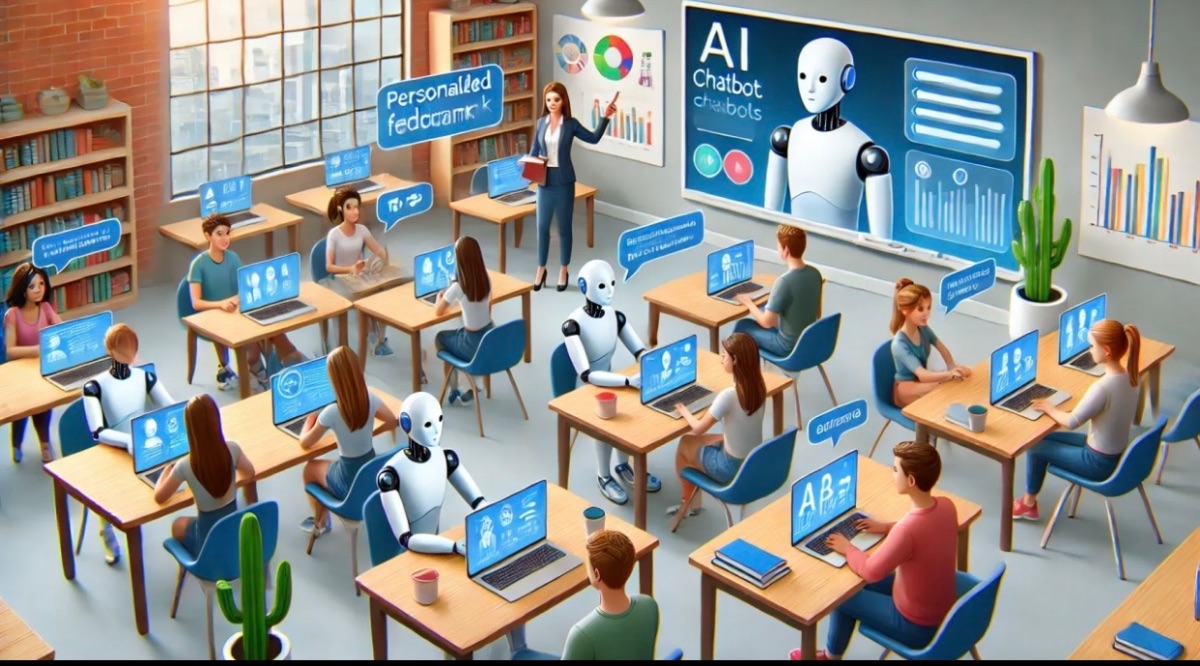
Technology keeps changing the way people live their everyday lives, and education is not left out. One of the biggest technological developments today is Artificial Intelligence (AI). AI refers to computer systems that are designed to perform tasks that usually require human intelligence, such as answering questions, solving problems and understanding language.
In recent years, AI has started playing a noticeable role in the education sector. Students no longer rely only on textbooks or classroom lectures to understand their school work. With AI-powered tools, learning has become faster, easier and more interactive.
For example, many students now use AI assistants like ChatGPT to explain difficult topics, summarise long notes or generate study ideas. Instead of spending hours searching through different sources online, students can simply ask a question and receive an explanation within seconds. This has made studying more convenient, especially for students who need quick guidance while learning.
However, the growing use of AI in education has also raised some concerns. Some teachers worry that students may become too dependent on these tools. If students rely too much on AI to complete assignments or answer questions, they may not fully develop important skills such as critical thinking, research and creativity.
Despite these concerns, Artificial Intelligence still has great potential to improve learning. When used responsibly, AI can serve as a helpful support system that makes education more accessible and engaging.
As technology continues to develop, one thing is clear: the future of education will likely involve a combination of human teaching and intelligent technology, working together to improve how students learn.
.jpeg?alt=media&token=96b327a5-8e62-4ed1-a078-308aff149ed1)