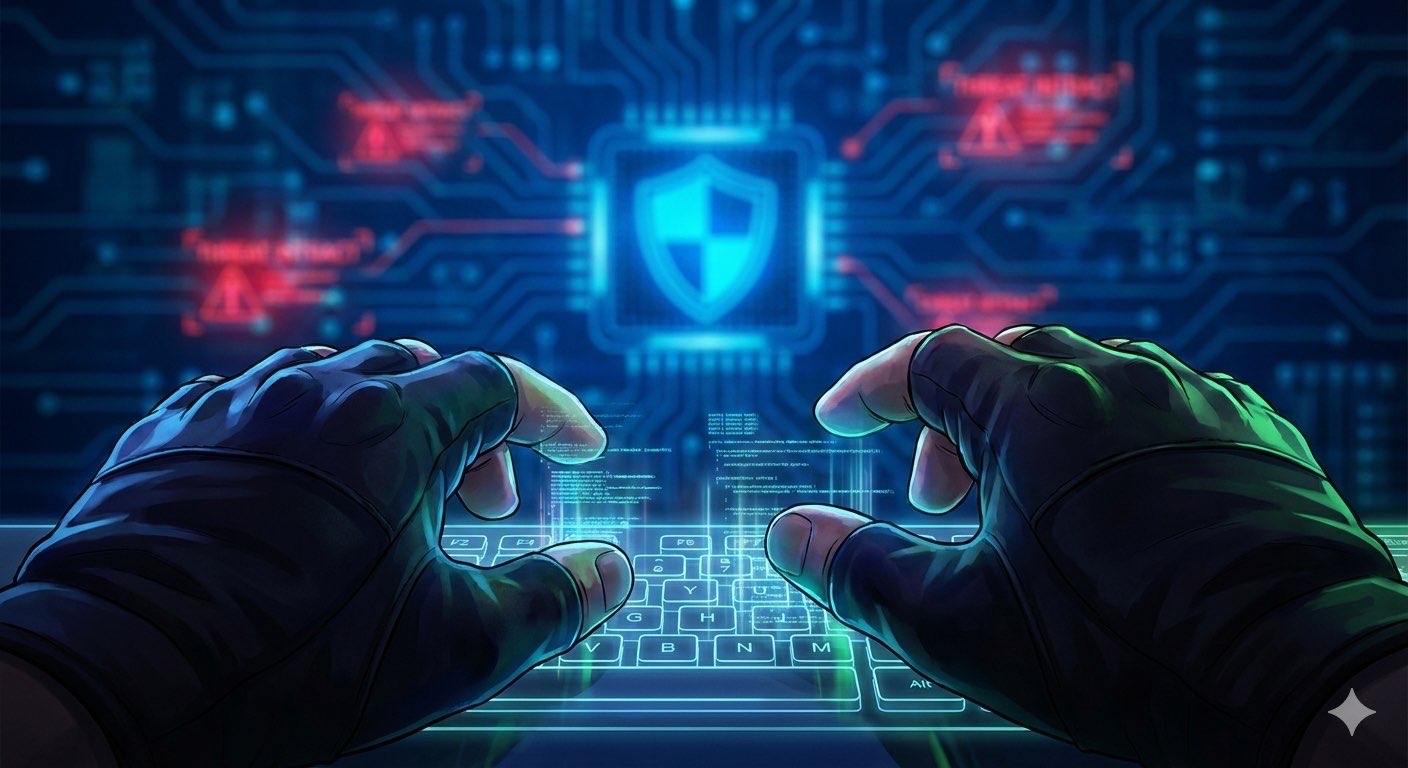
Cybersecurity: cyber threats, data privacy, blockchain technology, and the future of online security. - By Audu Hamzat, a 300 level mass communication student.
Cybersecurity is no longer a concern reserved for IT departments or government agencies—it has quietly become a daily human issue. Every message we send, every photo we store, every payment we make leaves a digital footprint, and that footprint is constantly being watched, tested, and sometimes exploited.
Cyber threats have evolved beyond obvious viruses and crude hacks. Today’s attackers are patient and strategic. They hide inside trusted systems, manipulate human behavior through phishing, and use automation to probe millions of devices at once. The danger isn’t just disruption it’s invisibility. Many breaches go undetected for months, quietly siphoning data while users carry on unaware.
This leads directly to the growing importance of data privacy. Personal data has become a form of currency, traded and analyzed at massive scale. Names, locations, habits, and preferences are collected not only by malicious actors but also by legitimate platforms whose business models depend on surveillance. The challenge of modern privacy isn’t just protecting data from theft it’s deciding who should have access to it at all, and under what conditions.
Amid these challenges, blockchain technology has emerged as a potential shift in how trust is established online. By distributing records across networks rather than storing them in a single vulnerable location, blockchain reduces the risk of centralized failure and tampering. While it is not a universal solution, it introduces a powerful idea: security through transparency and decentralization, where verification replaces blind trust.
Looking ahead, the future of online security will likely be less about building higher walls and more about designing smarter systems. Artificial intelligence will play a dual role defending networks while also empowering more sophisticated attacks. Zero-trust architectures, stronger encryption, and user controlled identities may become the norm rather than the exception.
Ultimately, cybersecurity is not just a technical problem it is a societal one. The systems we build reflect the values we prioritize. As our lives continue to move online, the question is no longer whether security matters, but how much responsibility we are willing to take for our data, our privacy, and our shared digital future.