The Impact of Artificial Intelligence on Employment.
The year 2026 marks a landmark period in the evolution of the global labor market, as Artificial Intelligence has moved beyond being a specialized tool to becoming an essential component of the modern workplace. We have entered the era of the "Intelligence Economy," where the value of human labor is no longer measured by the ability to process information, but by the ability to direct and refine the output of autonomous systems. This transition is not a simple story of job replacement; it is a complex reconfiguration of roles, skills and the very definition of productivity.
Currently, the impact of AI on employment is defined by a paradox of "efficiency-led restructuring." Major global firms are simultaneously reducing traditional headcounts while aggressively hiring for AI-integrated roles. This is particularly visible in the technology and financial sectors, where "AI-forward" strategies are being used to flatten organizational structures and speed up development cycles.
However, this is not a universal "job apocalypse." Instead, we are seeing a surge in demand for "AI-augmented" professionals, individuals who pair deep industry expertise with the ability to manage AI agents. Recruiters in 2026 increasingly view AI fluency not as a bonus, but as a mandatory prerequisite, similar to how basic computer literacy was viewed two decades ago.
In response to these changes, the global job market is splitting into two distinct paths: high-automation and high-empathy sectors. While routine cognitive tasks in fields like data entry, basic legal research, and entry-level programming are being rapidly automated, there is a renewed valuation of roles that require "uniquely human" traits. Careers in nursing, mental health, elder care, and artisanal trades are experiencing a significant resurgence.
These vocations rely on emotional intelligence, physical dexterity and ethical judgment qualities that as of 2026, AI still struggles to replicate with authenticity. This has led to a major shift in educational priorities, with a new focus on "future-ready" skills that emphasize critical thinking and social intelligence over rote memorization.
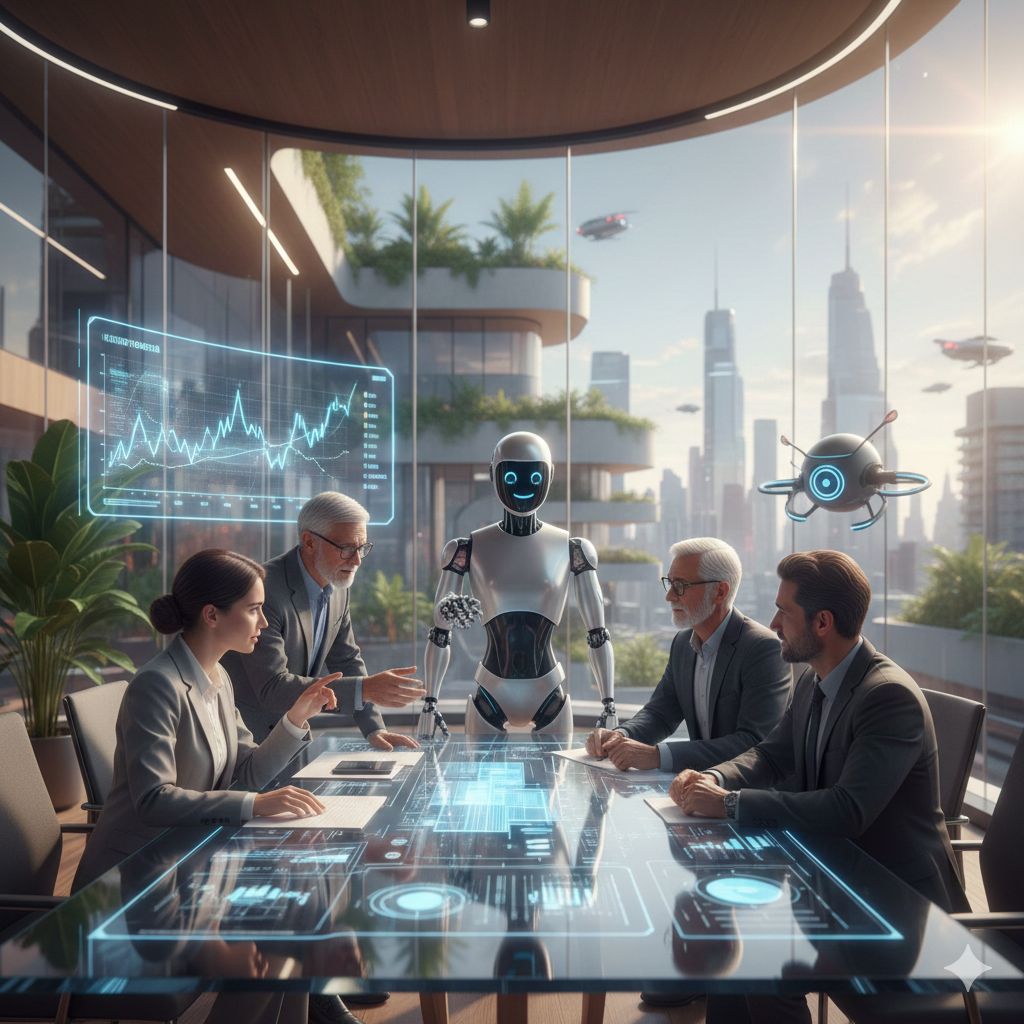
Furthermore, the workplace itself is being transformed into an "AI-Agentic" environment. Employees in 2026 are increasingly working alongside autonomous digital colleagues, agents that can manage emails, draft reports and even participate in strategic meetings. This has significantly increased productivity but has also created a "connection gap," where the speed of work can sometimes outpace the human need for collaboration and social bonding. For communication professionals and business leaders, the challenge is now to maintain a cohesive company culture in an environment where much of the logistical work is handled by non-human entities.
In conclusion, the impact of Artificial Intelligence on employment in 2026 is a narrative of adaptation rather than displacement. While the "job security" of the past may be diminishing, a new landscape of opportunity is emerging for those willing to embrace a lifecycle of continuous upskilling. The objective of the modern workforce is to achieve a state of "Human-AI Symbiosis," where technology handles the volume of work while humans provide the vision, ethics and emotional depth. As we navigate this transition, the success of the global economy will depend on our ability to ensure that the benefits of AI-driven productivity are shared broadly across all sectors of society.