Sudan’s army-aligned government has accused Ethiopia of allowing hostile drone operations from its territory, alleging that unmanned aircraft launched from inside Ethiopia struck multiple targets in Sudan in February and March.
In a sharply worded statement, Sudan’s foreign ministry warned Addis Ababa of what it called the consequences of these hostile acts, describing the strikes as clear aggression and a violation of Sudanese sovereignty. The ministry did not identify the operators of the drones, the number of attacks, or the precise locations hit, but said the incidents marked a dangerous escalation in a war already fuelled by foreign involvement.
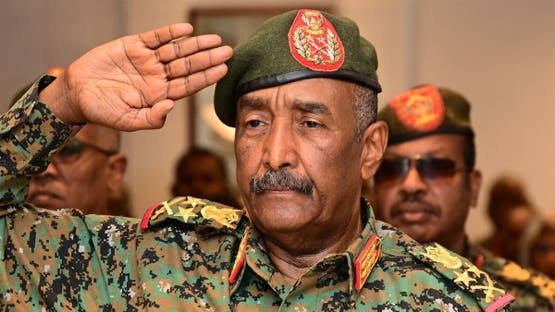
The accusation is the first formal claim by Khartoum that Ethiopia is directly implicated in the conflict between Sudan’s regular army, led by General Abdel Fattah al-Burhan, and the paramilitary Rapid Support Forces. The war has devastated cities, displaced millions and fractured state institutions, while drawing in a web of regional and international backers.
At the United Nations Security Council, diplomats have repeatedly warned that Sudan is becoming a battleground for competing foreign interests. British Foreign Secretary Yvette Cooper told the council that the absence of a ceasefire reflects the belief among Sudan’s rival commanders that military victory remains possible as they secure increasingly lethal weaponry from external sponsors.
Sudanese officials have long accused the United Arab Emirates of funnelling arms to the RSF, alleging that shipments move through Ethiopian territory before reaching Sudan. Abu Dhabi has rejected those claims, insisting it is not arming any side. Ethiopia has also previously denied involvement in Sudan’s internal conflict and has yet to publicly respond to the latest drone allegations.
Burhan’s army is widely seen as enjoying political and logistical support from Egypt, as well as backing from Saudi Arabia and Turkey, deepening the sense that Sudan’s war is entangled in broader regional rivalries.
UN High Commissioner for Human Rights Volker Turk has warned that civilian deaths have more than doubled this year, describing the conflict as bloody and senseless and driven by foreign sponsors who continue to feed weapons into the country. Fears of a wider regional spillover have already prompted Chad to close its border with Sudan, cutting off a key route for refugees and trade and underscoring how instability in Sudan is reshaping security calculations across the Horn of Africa and the Sahel.