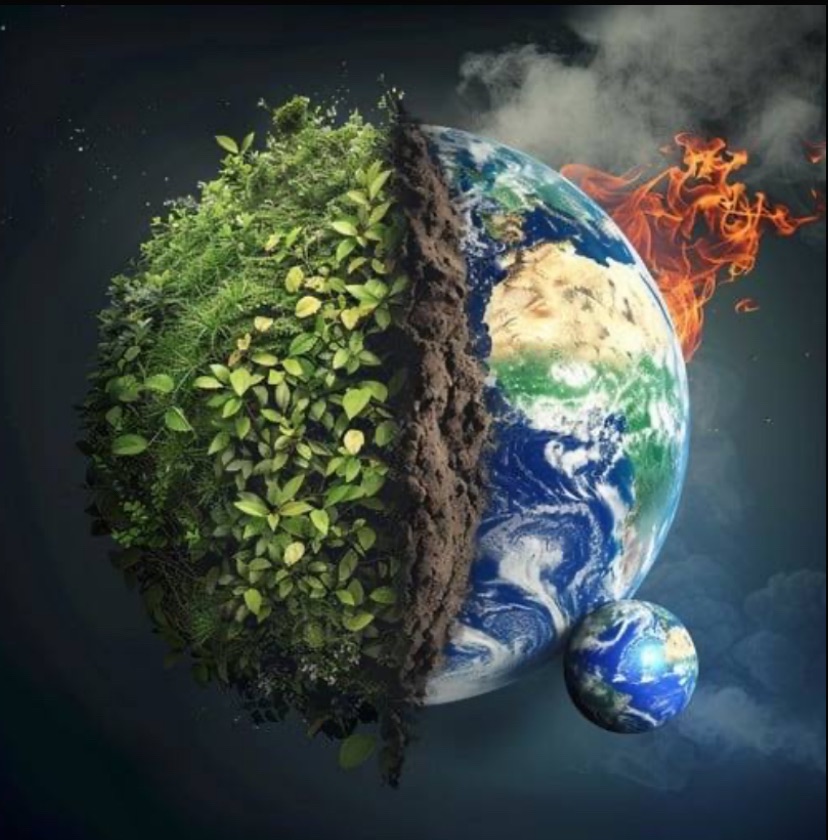
Nature Is Not a Resource
We have talked about the Look Well rule and the high price of convenience. But there is a bigger bug in our thinking that we need to fix. Most of us look at the forest, the rivers, and the minerals in the ground as a Resource, like a warehouse where we can just walk in and take what we want for free. But nature is not a storehouse. Nature is a System.
The Storehouse Lie
When you see a forest and all you see is timber for furniture, or you see a river and all you see is free water for your factory, you are making a big mistake. You are treating a living, breathing machine like it’s just a pile of spare parts.
In the tech world, if you go into a working computer and start pulling out wires because you need copper, the computer will stop working. You might have the copper in your hand (the asset), but you’ve killed the system. This is Extraction. You are taking value out without caring if the machine still runs.
Extraction vs. Coexistence
Real progress is not about how much we can extract; it’s about Coexistence.
•Extraction says: "How much gold can I dig out of this mountain today?"
•Coexistence says: "How can I live with this mountain so that it keeps providing air, water, and safety for my children tomorrow?"
When we reduce an ecosystem to just an asset on a balance sheet, we break the Interconnected Process we talked about earlier. A forest isn't just wood; it’s a cooling system, a water filter, and a home for the animals that keep the soil healthy. If you take the wood, you lose the cooler, the filter, and the soil. You’ve traded a permanent system for a one-time payment.
What Happens When Systems Break?
When we treat nature like a storehouse, we forget that the warehouse doesn't restock itself if the system is dead.
If you over-fish the sea, the fish factory shuts down forever.
If you over-pump the borehole, the water network goes dry.
This is the overclocking we mentioned before. We are pushing the hardware too hard and ignoring the cooling fans. Eventually, the hardware melts. When the ecosystem is reduced to just stuff we sell, the service it provides us for free (like rain and clean air) stops. And trust me, no technology is cheap enough to replace the rain.
As the architects of our own lives, we must change our blueprint. We need to stop looking at the land as a shop and start looking at it as a partner.
The rule remains: You cannot repair what you don’t understand. And if you don’t understand that nature is a system, you will keep trying to fix it by taking more from it. True intelligence is knowing that we are part of the circuit, not the owner of the power plant.
Look well at the system. Don't just see the assets; see the connections. That is the only way to stay in the game for the long run.