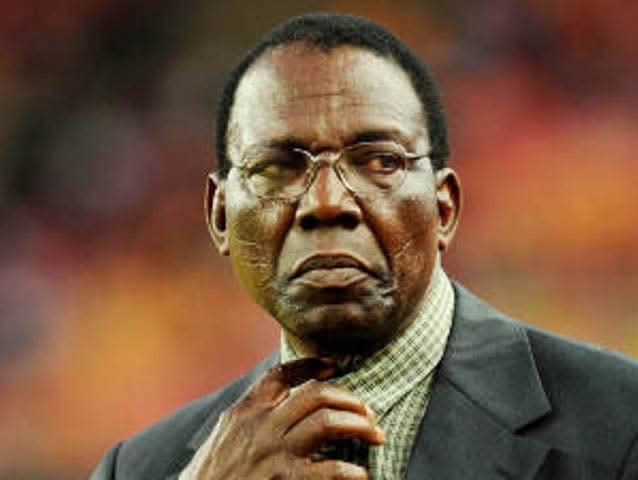
The Nigerian football community is in mourning following the death of Chief Festus Adegboyega Adegboye Onigbinde, the revered tactician who twice managed the Super Eagles and helped shape modern Nigerian football.
Onigbinde, who recently marked his 88th birthday, died after a brief illness, according to a statement issued by his family and circulated through close associates. The family described him as a respected football figure and community leader, noting his deep commitment to faith and public service.
Tributes have poured in from across the football world, with the Super Eagles leading the way. In a message posted on their official channels, the team extended condolences to his family and hailed him as a respected leader and a true servant of Nigerian football, before wishing him eternal rest.
Onigbinde’s first spell in charge of the national team came in the early 1980s, when the side was still known as the Green Eagles. He guided Nigeria to the final of the 1984 Africa Cup of Nations in Ivory Coast, overseeing a memorable campaign that ended in a 3–1 defeat to a star-studded Cameroon team. That run cemented his reputation as one of the continent’s brightest coaching minds.
Nearly two decades later, he was recalled to rescue a faltering World Cup project. Taking over from the late Shuaibu Amodu, Onigbinde led Nigeria to the 2002 FIFA World Cup. Tasked with rebuilding a divided squad in a short time, he introduced younger players and attempted a tactical reset, though the team exited at the group stage after losses to Argentina and Sweden and a draw with England.
Beyond the touchline, Onigbinde became one of African football’s most influential educators. He served as a technical instructor for the Confederation of African Football and for FIFA, training coaches across the continent and contributing to the development of coaching curricula. Colleagues often described him as principled, meticulous and unafraid to challenge football authorities when he felt standards were slipping.
In Nigeria, he was widely regarded as a guardian of the game’s integrity, frequently speaking out on youth development, grassroots structures and the need for long-term planning. His death leaves a void not only in Nigerian football but in the broader African coaching fraternity, where generations of managers trace their professional grounding to his teachings and example.